
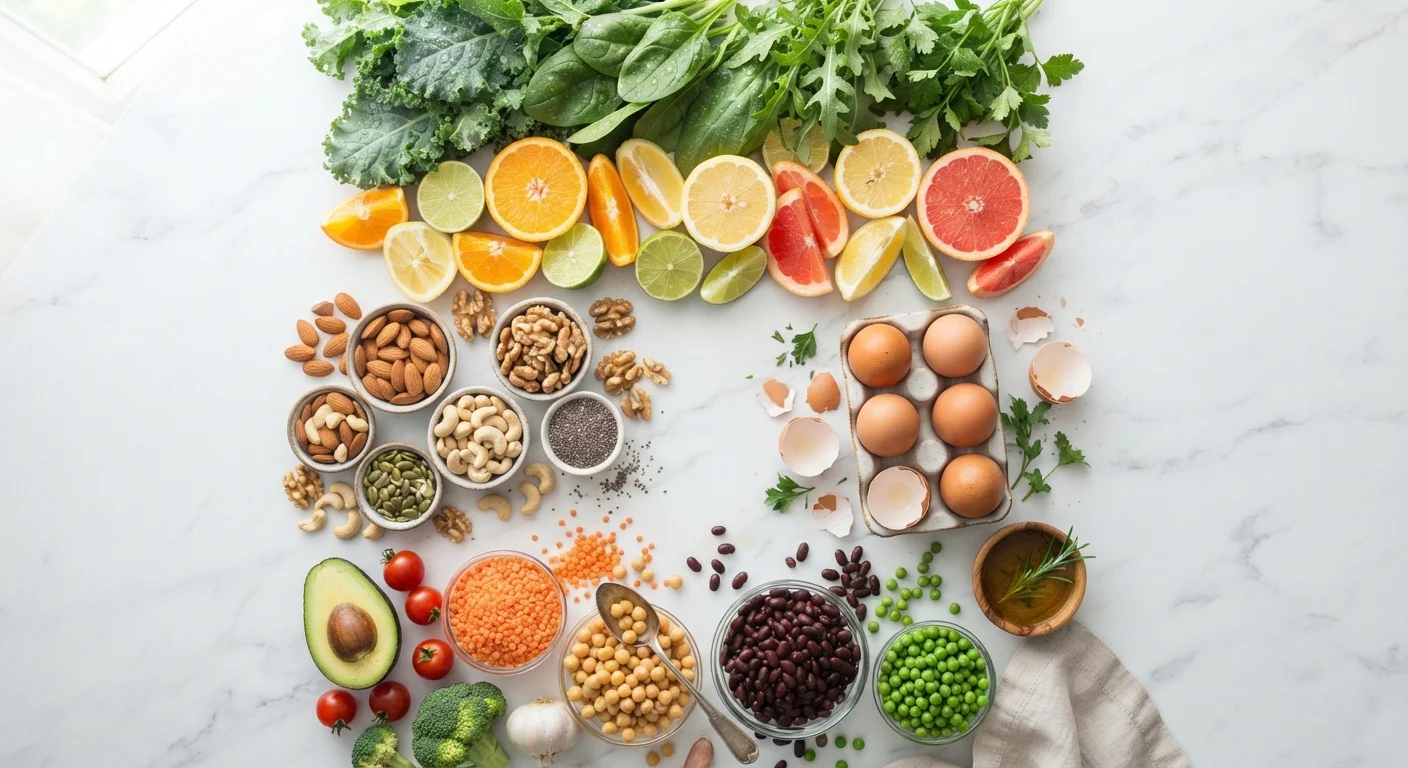
What Are Micronutrients?
Unlike macronutrients - carbohydrates, proteins, and fats - micronutrients are needed in much smaller amounts, yet they are indispensable to virtually every biological process in the body. The term covers two broad categories: vitamins (organic compounds) and minerals (inorganic elements). Together, they regulate metabolism, support immune defense, enable nerve signaling, and protect cells from damage. For a broader starting point on nutrition fundamentals, see our guide to healthy eating.
| Total essential vitamins | 13 (4 fat-soluble, 9 water-soluble) (National Institutes of Health, Office of Dietary Supplements) |
| Total essential minerals | Approximately 16, including macrominerals and trace minerals (Dietary Reference Intakes, National Academies) |
| Most common deficiencies in US adults | Vitamin D, calcium, potassium, and dietary fiber (2020-2025 Dietary Guidelines for Americans) |
| B12 concern for plant-based diets | B12 is found almost exclusively in animal-derived foods (NIH Office of Dietary Supplements) |
| Iron absorption tip | Pairing plant-based iron with vitamin C can improve absorption (Academy of Nutrition and Dietetics) |
Most adults obtain adequate micronutrients through a varied, whole-food diet. Gaps are more common in certain groups - older adults, people with restrictive diets, or those with conditions affecting nutrient absorption - making awareness of common sources genuinely useful.
Key Vitamins and What They Do
Vitamins are divided into two groups based on how the body stores them:
- Fat-soluble vitamins (A, D, E, K) are stored in fatty tissue and the liver. Because they accumulate, both deficiency and excess can cause problems over time.
- Water-soluble vitamins (C and the eight B vitamins) are not stored in significant amounts; the body excretes excess in urine, making regular dietary intake important.
Fat-Soluble Vitamins
- Vitamin A
- Supports vision (especially in low light), immune function, and skin cell turnover. Found in liver, dairy, eggs, and as beta-carotene in orange and leafy green vegetables.
- Vitamin D
- Critical for calcium absorption and bone health; also involved in immune regulation. Synthesized in skin through sun exposure and found in fatty fish, fortified dairy, and egg yolks.
- Vitamin E
- Acts as an antioxidant, protecting cell membranes. Sources include nuts, seeds, vegetable oils, and wheat germ.
- Vitamin K
- Essential for blood clotting (K1) and bone metabolism (K2). Leafy greens are the primary K1 source; K2 is found in fermented foods and some animal products.
Water-Soluble Vitamins
- Vitamin C
- Supports collagen synthesis, immune function, and acts as an antioxidant. Citrus, bell peppers, strawberries, and broccoli are rich sources.
- B Vitamins (B1 through B12, plus folate)
- This family drives energy metabolism, red blood cell production, and nervous system function. Sources span whole grains, legumes, meat, fish, dairy, eggs, and dark leafy greens. Vitamin B12 is found almost exclusively in animal products, making it a priority consideration for those following plant-based diets.
Micronutrient
A vitamin or mineral required by the body in small amounts to support normal physiological functions. Unlike macronutrients, micronutrients provide no caloric energy but are essential for health.
Fat-soluble vitamin
A vitamin (A, D, E, or K) that dissolves in fat and is stored in the body's fatty tissues and liver. Because they accumulate, both deficiency and excessive intake can have health consequences.
Water-soluble vitamin
A vitamin (C or any of the B vitamins) that dissolves in water and is not stored in large amounts. Excess is generally excreted in urine, so regular dietary intake is necessary.
Trace mineral
A mineral the body needs in very small quantities (milligrams or micrograms). Examples include iron, zinc, iodine, and selenium. Small amounts does not mean less important - deficiencies can have significant health effects.
Antioxidant
A molecule that neutralizes free radicals - unstable compounds that can damage cells. Vitamins C and E and the mineral selenium act as antioxidants in the body.
Bioavailability
The proportion of a nutrient that the body actually absorbs and uses after consumption. Factors such as food form, cooking method, and other nutrients present can all influence bioavailability.
Essential Minerals and Their Roles
Minerals are classified as macrominerals (needed in larger amounts) or trace minerals (needed in smaller amounts). Both are equally essential; the distinction is purely about quantity.
~42%
US adults with vitamin D insufficiency
A 2022 analysis published in Nutrients estimated roughly 42% of US adults have insufficient vitamin D levels based on serum measures.
< 3%
US adults meeting potassium recommendations
The 2020-2025 Dietary Guidelines for Americans identifies potassium as a nutrient of public health concern due to widespread underconsumption.
Macrominerals
- Calcium - Builds and maintains bones and teeth; also involved in muscle contraction and nerve signaling. Dairy, fortified plant milks, tofu, and leafy greens are key sources.
- Magnesium - Participates in over 300 enzymatic reactions, including energy production and muscle function. Found in nuts, seeds, whole grains, and dark chocolate.
- Potassium - Helps regulate fluid balance, blood pressure, and muscle contractions. Bananas, potatoes, beans, and leafy greens are good sources.
- Phosphorus - Works alongside calcium in bone structure and is involved in energy transfer (ATP). Protein-rich foods - meat, fish, dairy, and legumes - supply most dietary phosphorus.
Important Trace Minerals
- Iron - Central to oxygen transport in red blood cells. Heme iron (from meat) is more readily absorbed than non-heme iron (from plants); pairing plant sources with vitamin C improves absorption.
- Zinc - Supports immune function, wound healing, and DNA synthesis. Oysters, red meat, poultry, beans, and nuts are notable sources.
- Iodine - Required for thyroid hormone production, which governs metabolism and development. Iodized salt and seafood are primary sources in the US diet.
- Selenium - Functions as an antioxidant and supports thyroid metabolism. Brazil nuts, seafood, and whole grains provide selenium.
To understand how micronutrients interact with macronutrients in everyday eating, see our macronutrients overview. You can also learn how to spot micronutrient information on packaged foods by reading a Nutrition Facts label.
This article is for general informational and educational purposes only and does not constitute medical or dietary advice. Individual nutrient needs vary. Consult a qualified healthcare professional or registered dietitian for guidance specific to your health situation.