How Connecting Flights Are Structured
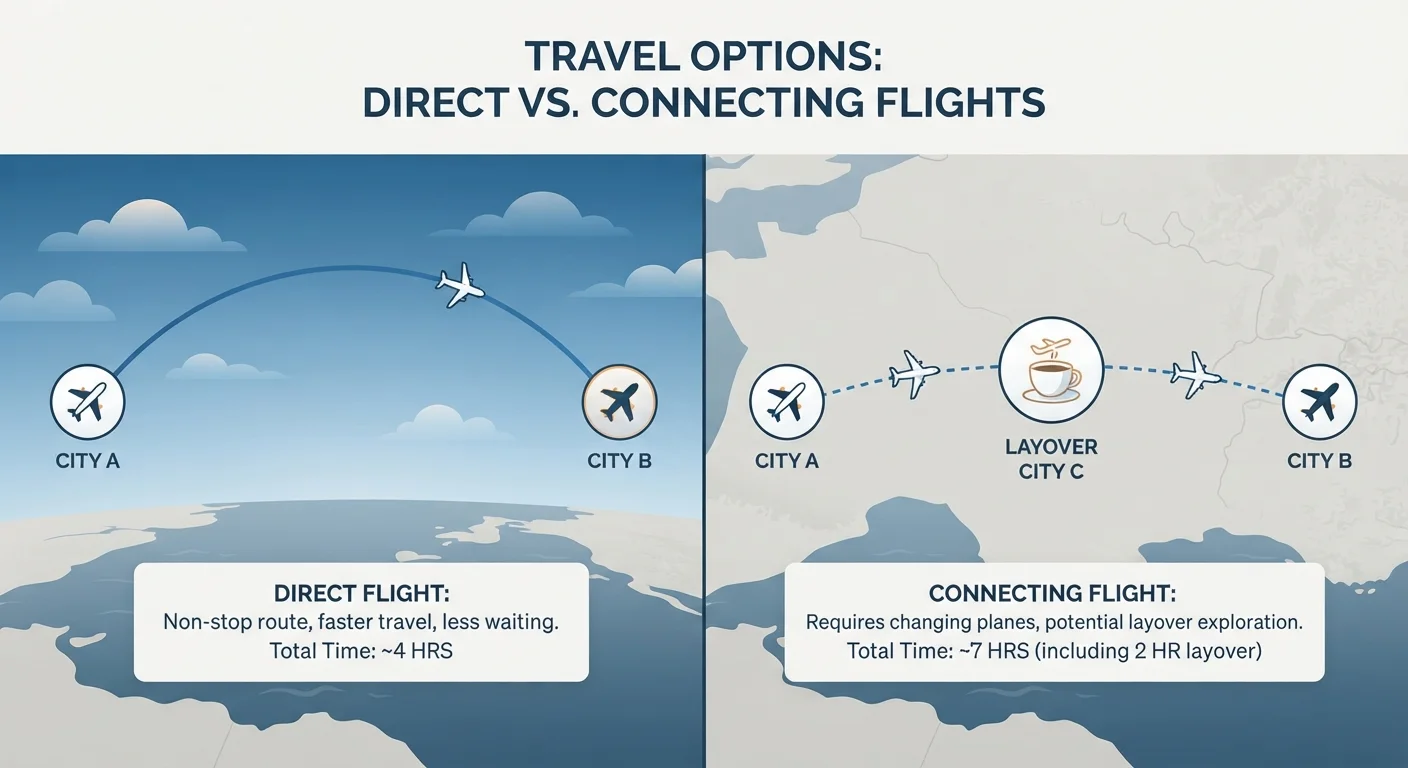
A connecting itinerary strings two or more flight segments together into a single journey. The key structural distinction every traveler should grasp is whether those segments are booked on one ticket or separate tickets.
On a single ticket (one booking record), the airline assumes responsibility for getting you to your final destination. If an inbound delay causes you to miss your outbound connection, the carrier must rebook you. On separate tickets - say, one bought directly with Carrier A and another purchased independently on Carrier B - each booking is its own contract. No airline is responsible for the other's delays.
See our framework for weighing direct vs. connecting flights before deciding whether the price savings on a connecting itinerary justify the added complexity.
~20%
US flights arriving late in a typical year
According to Bureau of Transportation Statistics data, roughly 1 in 5 US domestic flights arrives behind schedule in an average year.
45-180 min
Typical minimum connection time range
Published minimum connection times at major US hub airports vary widely based on terminal layout and domestic vs. international routing.
€250-€600
EU compensation for long delays
EU Regulation 261/2004 mandates fixed passenger compensation for qualifying delays on flights departing EU airports, based on route distance.
Minimum Connection Times: What They Mean in Practice
Airlines and airports publish what are called Minimum Connection Times (MCTs) - the shortest interval the system considers sufficient to transfer between flights at a given airport. These are used when building itineraries, but they assume things go smoothly: no gate changes, no long walks between terminals, no customs lines.
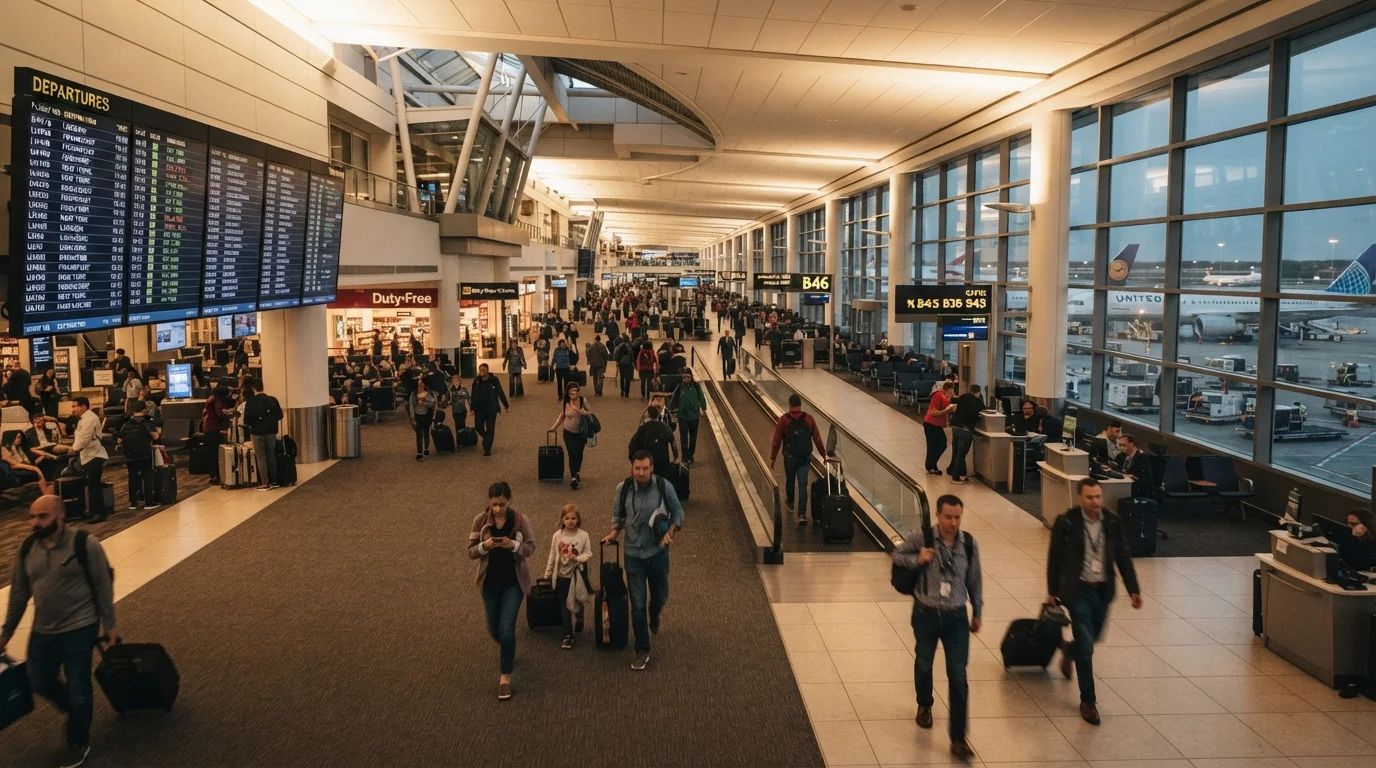
In practice, MCTs can be optimistic. A 45-minute domestic connection at a single-concourse regional airport is very different from a 45-minute connection at an airport requiring a tram ride between terminals. When evaluating layover length, consider:
- Terminal layout - same terminal vs. separate buildings requiring a shuttle or tram
- Domestic vs. international - international arrivals require customs and re-security, adding 45-90 minutes or more
- Time of day - peak-hour airports see more congestion at security checkpoints and gate areas
- Your own mobility needs - if you travel with children, mobility aids, or significant carry-on luggage, build in extra time
As a general rule, 90 minutes domestic and 2.5-3 hours international is a safer working standard than published minimums. A complete trip logistics framework covers how to build buffer time into the full arc of your trip.
What Airlines Are Obligated to Do When You Miss a Connection
US airline obligations for missed connections are governed primarily by each carrier's Contract of Carriage - the legal agreement you accept when you buy a ticket - plus Department of Transportation (DOT) oversight. Here is what the rules generally look like:
When the airline is at fault (mechanical, crew, operational delay)
- Rebooking on the next available flight to your destination, at no charge
- Meal vouchers for significant waits (policies vary by carrier)
- Hotel accommodation for overnight delays caused by the airline
When the cause is outside the airline's control (weather, air traffic control)
- Rebooking is still typically offered, but hotel and meal obligations are limited or absent under most US carrier policies
- Some carriers offer goodwill vouchers - these are discretionary, not guaranteed
The US does not have a blanket compensation mandate equivalent to the EU's Regulation 261/2004. If your itinerary departs from an EU airport, you may be entitled to fixed compensation (€250-€600 depending on distance) for significant delays. Always verify which rules apply to your specific routing.
Act Fast When You See a Delay
If your inbound flight is visibly running late, start rebooking options before you land. Many airline apps allow you to see and select alternative flights in real time. Gate agents at the destination serve many passengers at once - getting ahead of the queue, even digitally, can make a significant difference in which replacement flight you're placed on.
Reading your ticket's fine print before booking will help you understand exactly what your carrier commits to in its Contract of Carriage.
Protecting Yourself Before and During a Disruption
The best defense against a missed connection is preparation before you leave home.
Before you travel
- Book on one ticket wherever possible. If you need to piece together an unusual routing, understand that separate tickets carry real financial risk.
- Choose longer layovers at complex airports. The time cost of a 2-hour layover is usually modest; the cost of a missed connection is not.
- Download the airline's app and enable notifications. Real-time gate changes and delay alerts often come through the app before they appear on departure boards.
- Consider travel insurance that covers trip interruption and missed connections - particularly useful when your carrier's obligations are limited by weather or other circumstances. See our guide to sizing a travel emergency fund for context on how disruptions translate into out-of-pocket costs.
If a missed connection is imminent
- Notify crew or gate staff as early as possible - before landing if you can.
- Head directly to the gate for your rebooking, or use the app simultaneously.
- Keep receipts for any meals or accommodation you purchase; these support insurance claims even when the airline declines to cover them.
Understanding your ticket terms ahead of time makes a real difference. Knowing what your fare class allows - including change and rebooking rights - reduces the guesswork when you're already under stress at the gate.