Why Dogs React Differently to Human Foods
Dogs share our homes but not our metabolisms. Many foods that humans digest safely contain compounds that a dog's liver, kidneys, or nervous system cannot process - sometimes with life-threatening results. Understanding why certain foods are toxic, not just which ones to avoid, helps owners make better day-to-day decisions about what their dog is exposed to.
Toxicity risk depends on the specific food, the amount consumed, and the dog's size and individual health status. A small amount of one toxin may cause mild gastrointestinal upset in a large dog while triggering organ failure in a small one. This is general educational information; always contact your veterinarian or an animal poison control hotline immediately if you suspect your dog has eaten something harmful.
| Most dangerous chocolate type | Baking/dark chocolate (highest theobromine) (ASPCA Animal Poison Control Center) |
| Xylitol onset time | Symptoms can appear within 30 minutes (Veterinary toxicology consensus) |
| Allium toxin status after cooking | Remains toxic - cooking does not neutralize (Merck Veterinary Manual) |
| Safe grape/raisin amount | No established safe dose for dogs (ASPCA Animal Poison Control Center) |
| Emergency contact | ASPCA Animal Poison Control Center (24-hour hotline) |
| Macadamia symptom window | Onset within 12 hours; may last up to 48 hours (Veterinary toxicology literature) |
High-Risk Foods and the Reactions They Cause
The following foods are among the most commonly implicated in canine poisoning cases, according to veterinary toxicology resources.
Chocolate, Coffee, and Caffeine
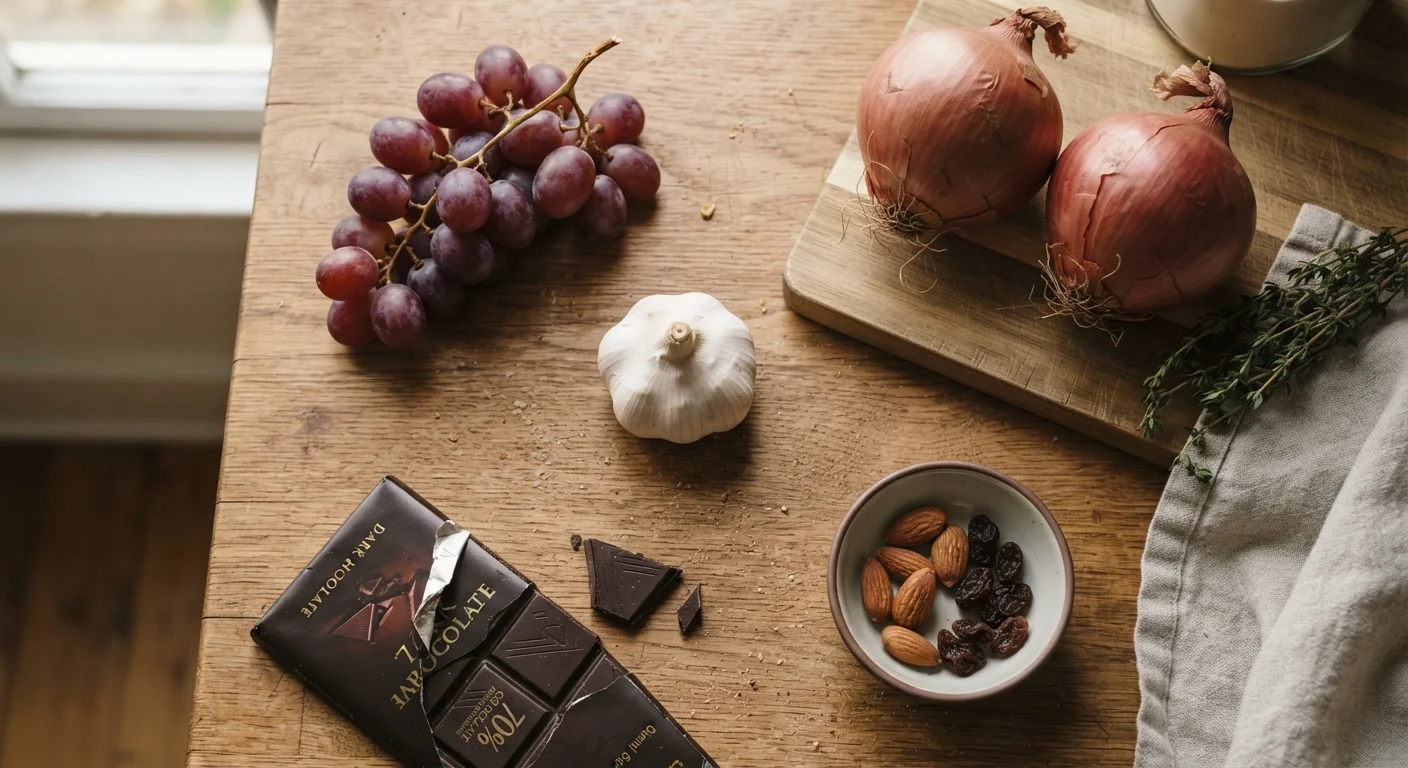
These contain methylxanthines - specifically theobromine and caffeine - which dogs metabolize far more slowly than humans. Even small quantities can cause vomiting, diarrhea, rapid heart rate, tremors, and seizures. Dark chocolate and baking chocolate carry the highest concentration of theobromine and pose the greatest risk.
Grapes and Raisins
The exact toxic compound in grapes and raisins is not yet fully identified, but ingestion is strongly linked to acute kidney failure in dogs. Symptoms include vomiting, lethargy, reduced urination, and loss of appetite. There is no established safe amount - even small quantities have caused serious illness in some dogs.
Onions, Garlic, Leeks, and Chives
All members of the Allium family contain compounds that damage red blood cells, leading to hemolytic anemia. Cooking does not neutralize the toxin. Signs may be delayed by several days and include pale gums, weakness, rapid breathing, and collapse.
Xylitol
This sugar alcohol - found in sugar-free gum, some nut butters, and certain baked goods - causes a rapid release of insulin in dogs, leading to hypoglycemia (dangerously low blood sugar). Higher doses are associated with acute liver failure. Symptoms include vomiting, disorientation, and seizures, often within 30 minutes of ingestion.
Macadamia Nuts
Even a small amount can cause weakness, hyperthermia, vomiting, tremors, and inability to walk. Symptoms typically appear within 12 hours and may last up to 48 hours.
Alcohol and Raw Yeast Dough
Alcohol from any source - including unbaked dough that ferments in the stomach - can cause ethanol toxicosis: vomiting, disorientation, respiratory depression, and potentially coma or death. Raw dough also expands in the stomach, creating a risk of bloat.
Methylxanthines
A class of compounds found in chocolate and caffeine-containing foods that stimulate the central nervous system and cardiovascular system. Dogs metabolize these substances much more slowly than humans, allowing toxic levels to accumulate.
Hemolytic Anemia
A condition in which red blood cells are destroyed faster than they can be produced. In dogs, Allium toxins (from onions and garlic) are a known cause, leading to reduced oxygen delivery throughout the body.
Hypoglycemia
Abnormally low blood sugar levels. Xylitol triggers a rapid insulin release in dogs, causing blood glucose to drop sharply, which can lead to seizures and loss of consciousness.
Ethanol Toxicosis
Poisoning caused by ethanol (alcohol) absorption. Even small amounts of alcohol can cause serious central nervous system depression in dogs due to their lower body weight and sensitivity.
Acute Kidney Failure
A sudden and severe loss of kidney function. Grape and raisin ingestion is associated with this condition in dogs, though the precise toxic mechanism has not yet been fully identified by researchers.
Theobromine
The primary methylxanthine in chocolate responsible for canine toxicity. It is found in highest concentrations in dark chocolate and unsweetened baking chocolate.
What to Do in a Suspected Poisoning
Time matters. If you believe your dog has eaten any of the foods listed above, do not wait for symptoms to appear. Contact your veterinarian or the ASPCA Animal Poison Control Center (available 24 hours) immediately. Have ready: the dog's weight, what was eaten, the estimated quantity, and when ingestion occurred.
Do not induce vomiting unless explicitly directed by a veterinary professional. In some poisoning cases, inducing vomiting can cause additional harm.
Preventing exposure is far more effective than treating poisoning. Store high-risk foods securely, brief household members and guests about the risks, and be especially vigilant during holidays when chocolate, grapes, and alcohol are more accessible. If you are building a home-cooked meal plan for your dog, see our article on the hidden pitfalls of homemade pet diets for guidance on nutritional safety. You may also find it useful to review how to transition your dog to a new food safely if you are making any dietary changes.
This article is for informational and educational purposes only and does not constitute veterinary or medical advice. Always consult a licensed veterinarian regarding your dog's health, diet, or any concerns about toxic ingestion.