Why Food Transitions Matter
A pet's gastrointestinal tract harbors a complex community of bacteria, enzymes, and other microorganisms specifically adapted to the food it processes regularly. When that food changes suddenly - even to a nutritionally superior option - the gut microbiome needs time to recalibrate. Without an adjustment period, even healthy pets commonly experience loose stools, vomiting, gas, or temporary food refusal.
This is not necessarily a sign that the new food is wrong for your pet. It simply reflects normal digestive biology. Understanding this distinction can save owners a lot of anxiety and prevent unnecessarily abandoning a diet change that would otherwise benefit their animal.
For owners thinking about longer-term dietary planning, our guide on feeding your dog through every life stage explains how nutritional needs shift over time and why periodic food transitions are a normal part of responsible pet ownership. If you're newer to feeding fundamentals, nutrition foundations every new pet owner should understand is a helpful starting point before making any diet change.
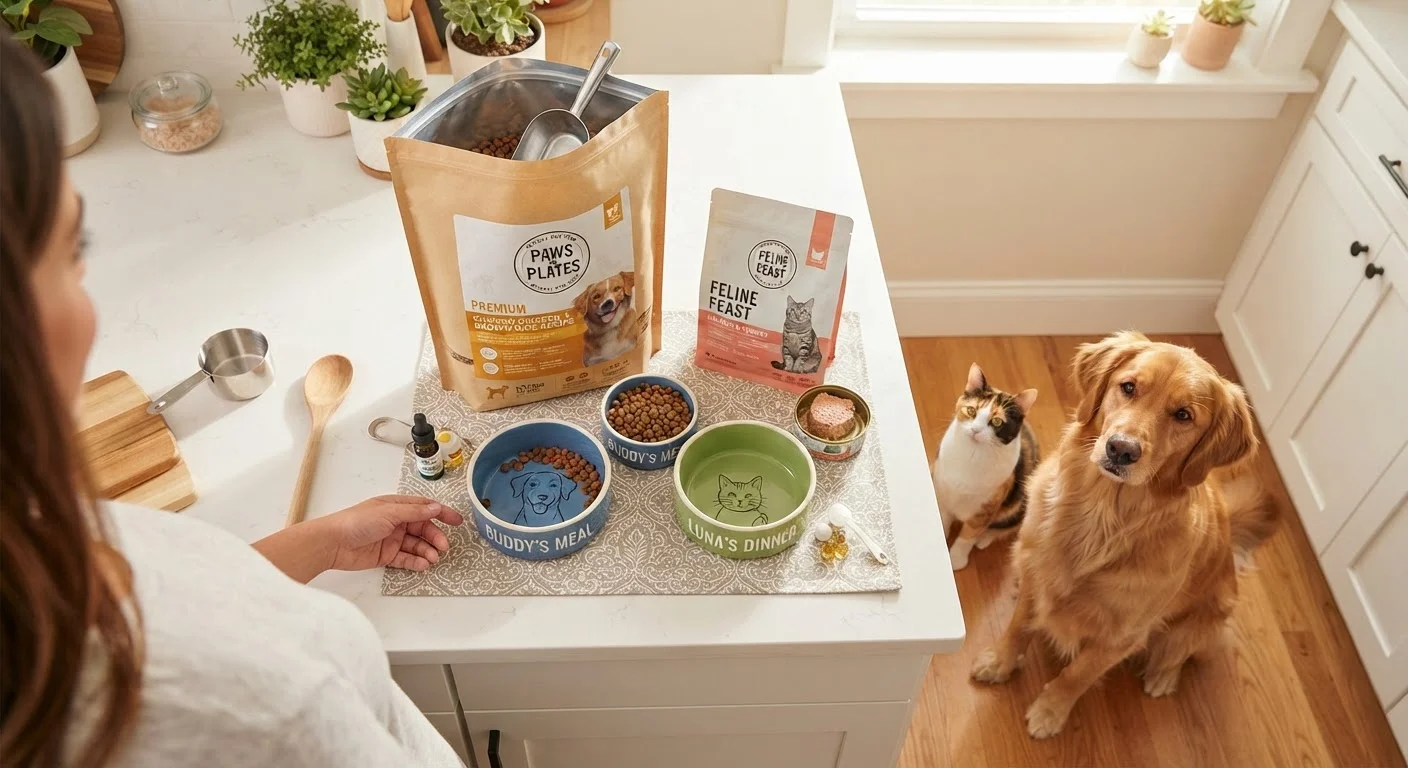
What you will need
Step-by-Step: How to Transition Safely
The standard transition framework recommended by most veterinary nutritionists involves progressively increasing the ratio of new food to old food over a 7-to-10 day window. The steps below apply to both dogs and cats, whether transitioning between dry, wet, or raw formats.
Calculate Daily Portion and Prepare Two Containers
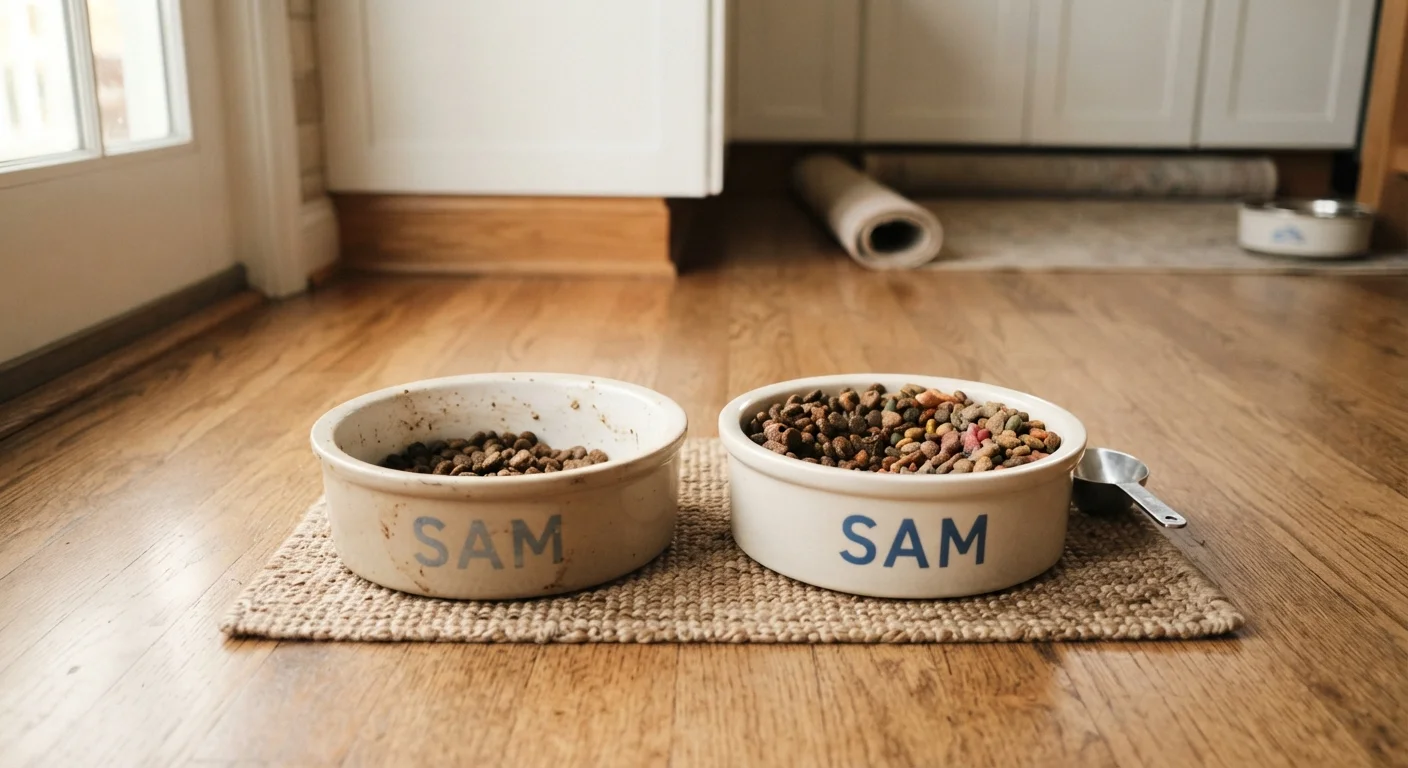
Before mixing anything, confirm the correct daily serving size for the new food using the manufacturer's feeding guidelines as a starting point, adjusted for your pet's weight and age. Keep the old and new foods in separate containers so you can measure and mix precisely at each meal.
Days 1-3: 75% Old Food, 25% New Food
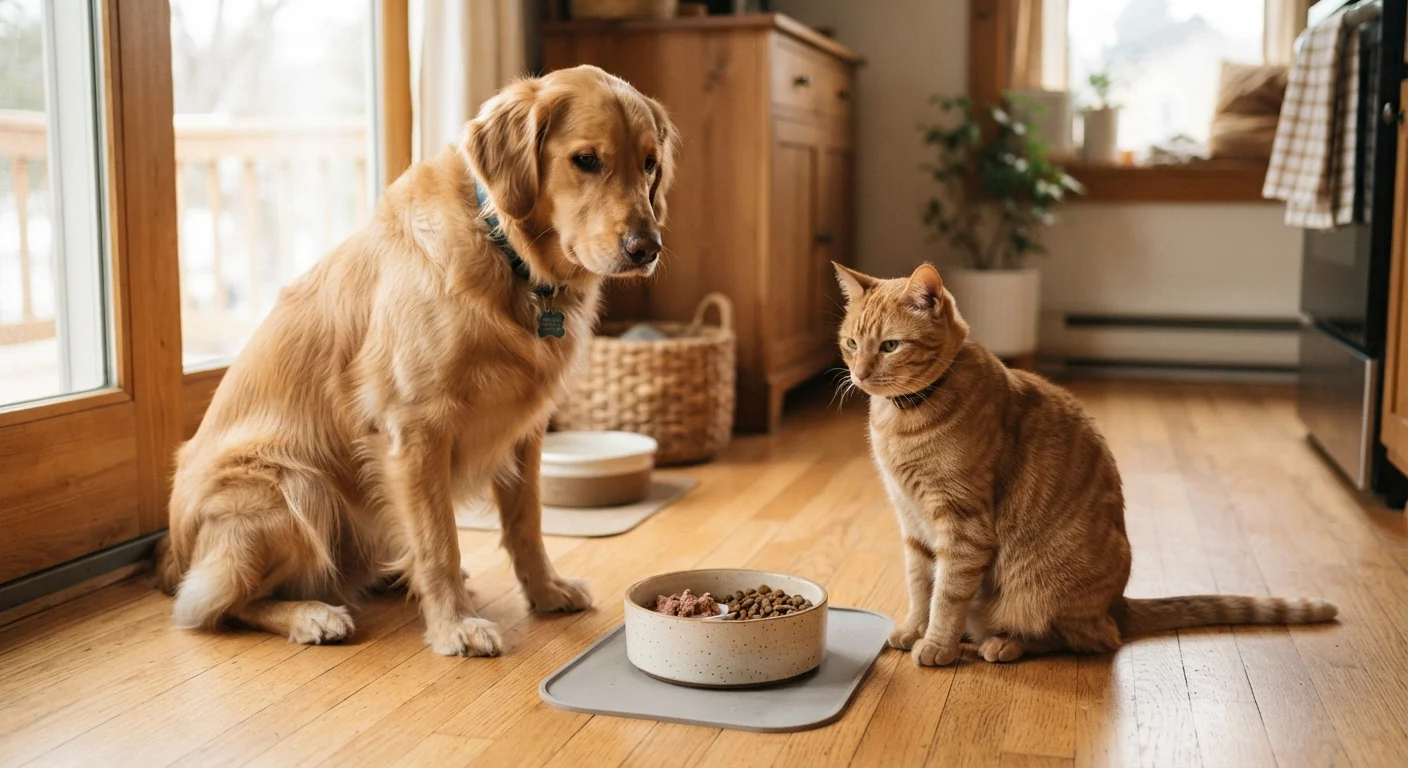
For the first three days, mix roughly three-quarters of the old food with one-quarter of the new. This ratio introduces the new formula's proteins, fats, and fiber to the gut in a quantity small enough that most digestive systems handle it without reaction.
Days 4-6: 50% Old Food, 50% New Food
Move to an equal split once your pet is eating willingly and stools remain normal. Check stool consistency each day - it should be firm, well-formed, and similar to your pet's normal baseline. Slight softening at this stage is common; significant loosening or vomiting signals you should pause and return to the previous ratio for an additional 2-3 days.
Days 7-9: 25% Old Food, 75% New Food
Shift to three-quarters new food for the final phase. Most pets sail through this stage without incident if earlier phases went smoothly. Continue daily monitoring and ensure fresh water is always available, as a change in dietary fiber or sodium content can temporarily affect thirst.
Day 10 Onward: Full Transition to New Food
Serve the new food exclusively. Continue monitoring for one full week after the switch is complete. Appetite, coat condition, energy level, and stool quality are the key indicators that the diet change has been successful. Improvements in coat shine or energy may become apparent within 2-4 weeks, though individual variation is wide.
Once the transition is complete, spend at least a week confirming your pet has fully adapted before auditing the overall diet. Our feeding check for nutritional completeness can help you evaluate whether the new food is meeting your pet's full requirements.
Special Cases and When to Slow Down
Not every pet follows the standard 7-10 day timeline comfortably. Several factors may warrant a slower, more cautious approach:
- Senior pets: Older animals often have reduced digestive resilience. Consider extending the transition to 14 days or more. See what to expect as pets age for broader context on senior care.
- Cats: Cats are especially prone to food neophobia - the refusal of unfamiliar foods - and may require an even more gradual introduction, sometimes over several weeks.
- Pets with chronic GI conditions: Inflammatory bowel disease, pancreatitis, or a history of food sensitivities all call for veterinary guidance before any diet change is attempted.
- Rescue or shelter animals: Their prior diet history is often unknown, making their baseline gut microbiome harder to predict.
When to Contact Your Veterinarian Immediately
Bloody stool, repeated vomiting, lethargy, or signs of abdominal pain at any point during a food transition are not normal side effects - they are signals that require prompt veterinary attention. Do not attempt to continue or restart the transition until your pet has been evaluated. These symptoms may indicate an underlying condition unrelated to the food change itself.
If you're considering a homemade diet as an alternative, be aware that nutritional gaps are a serious and common risk - our article on the hidden pitfalls of homemade pet diets outlines what frequently goes wrong.
This article provides general educational information only and is not a substitute for personalized veterinary advice. Always consult a qualified veterinarian before making significant changes to your pet's diet, especially if your pet has an existing health condition.