
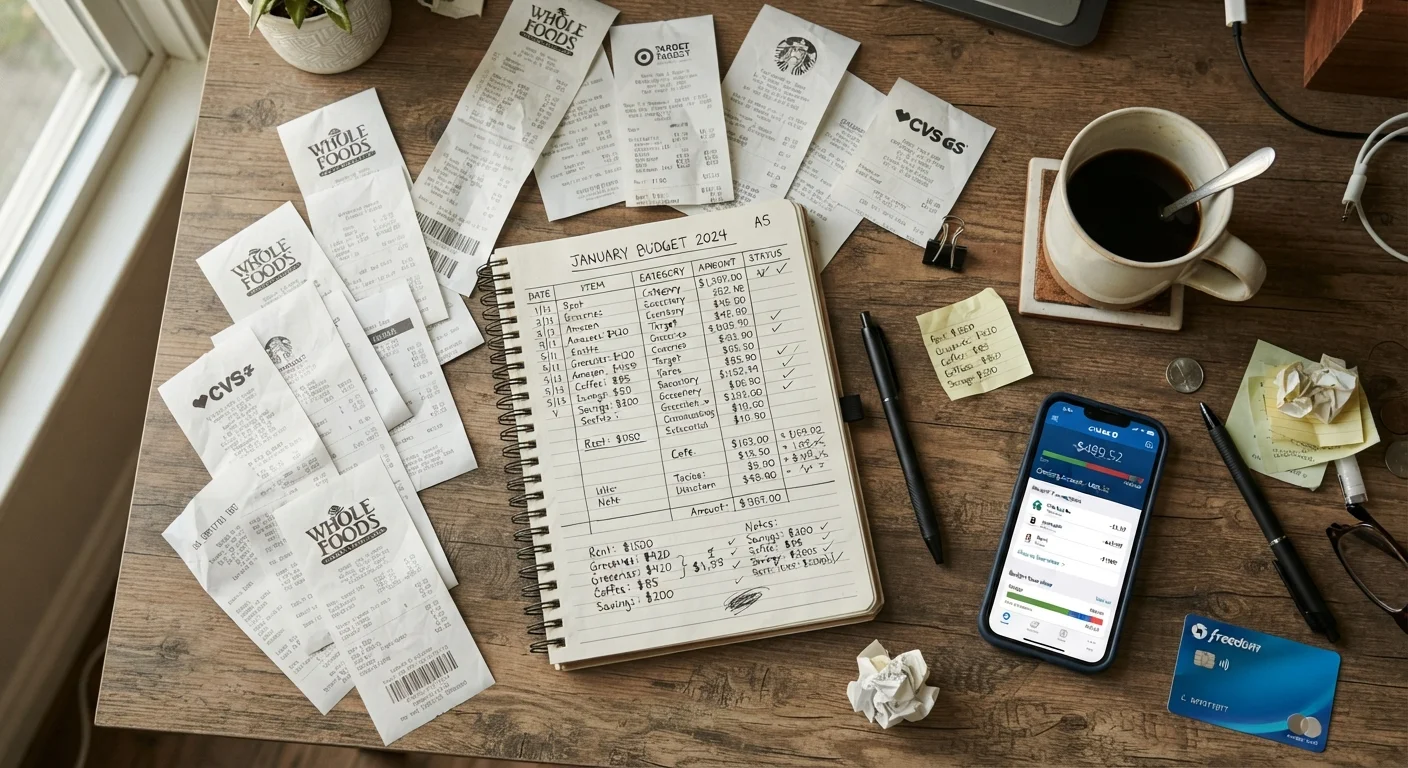
The Illusion of Financial Awareness
Ask most Americans whether they have a general sense of their monthly spending, and the majority will say yes. Ask them to write down that number without checking their accounts first, and the figure they produce often falls far short of reality. This isn't a matter of dishonesty-it's a predictable outcome of how our brains categorize and remember financial transactions.
Human memory tends to anchor on salient, deliberate purchases: the rent payment, the car payment, the grocery run. What slips through are the dozens of smaller, more frequent decisions-the delivery fee, the streaming upgrade, the parking charge-that collectively account for a significant share of monthly outflows. Financial researchers sometimes call this the spending awareness gap, and it affects households across the income spectrum.
Understanding why this gap exists is more useful than simply feeling bad about it. Once you recognize the structural and psychological forces at work, you can design simple systems to counteract them. See our discussion of common budgeting myths for related misconceptions that compound this problem.
~33%
Americans with no monthly budget
Surveys by the National Foundation for Credit Counseling have consistently found that roughly one-third of U.S. adults do not maintain any form of monthly budget.
20-40%
Typical underestimate of discretionary spending
Consumer behavior research suggests people routinely underestimate spending in categories like dining and entertainment by this margin when estimating from memory alone.
$219/month
Average subscription spend per U.S. household
West Monroe's annual consumer subscription survey found U.S. households spend significantly more on subscriptions than they self-report, with averages approaching this figure.
Why Digital Spending Is Particularly Hard to Track
Cash spending creates a natural feedback loop: you hand over physical bills and your wallet gets lighter. Digital payments-debit cards, credit cards, tap-to-pay, and in-app purchases-remove that tangible signal entirely. Research in behavioral economics has found that people spend more freely when no physical exchange takes place, partly because the psychological "pain" of parting with money is diminished.
The rise of one-click purchasing and saved payment credentials has amplified this effect. Buying something online now requires almost no friction. That convenience is genuinely useful, but it also means that spending decisions happen faster and with less conscious deliberation than they once did. By the end of a month, dozens of these frictionless transactions have accumulated-and most people cannot reconstruct them from memory alone.
Try a One-Month Spending Audit
Before building any budget, spend one full month simply recording every transaction without trying to change your behavior. Use your bank's transaction history or download statements into a spreadsheet. The goal is observation, not judgment. Most people find at least two or three spending patterns they weren't aware of-and that awareness alone creates natural motivation to adjust.
The Subscription Problem and Irregular Expenses
Two categories consistently derail spending awareness more than any others: subscriptions and irregular expenses.
Subscriptions are designed to be invisible. They charge automatically, often at different times of the month, and many services deliberately make cancellation inconvenient. Over time, households accumulate streaming platforms, fitness apps, cloud storage plans, news memberships, and software licenses-some of which haven't been actively used in months. Learn more about how hidden costs quietly wreck monthly budgets.
Irregular expenses present a different challenge. Car repairs, medical copays, annual insurance premiums, holiday gifts, and home maintenance costs don't show up every month-so people mentally omit them from their regular budget. Then, when they arrive, they feel like emergencies rather than predictable costs. Dividing annual irregular expenses by twelve and treating that amount as a monthly line item is one of the most effective corrections for this blind spot.
Miscategorization also plays a role: a business lunch coded as a personal dinner, or a home office supply lumped in with general shopping, skews the picture. See how spending categories often get miscoded for a closer look at why accurate labeling matters.
Building Awareness Without Overhauling Your Life
Closing the spending awareness gap doesn't require an elaborate system. What it requires is a shift from passive to active attention-and a small amount of structured time each week.
A practical starting point: set aside 10-15 minutes at the end of each week to review transactions in your bank and credit card accounts. Don't aim for perfection-aim for pattern recognition. After two or three weeks, most people start to see consistent categories where their spending surprises them. That recognition alone often changes behavior, even before any formal budget is in place.
From there, the goal is building habits that sustain awareness over time. Research-backed habits that separate people who stick to a budget show that it's consistency of review-not willpower or complexity-that makes tracking durable. Even travelers benefit from this approach: travel budgets break down for many of the same reasons everyday budgets do-invisible costs and irregular timing.
This article is for general informational and educational purposes only and does not constitute personalized financial advice. For guidance tailored to your circumstances, consult a qualified financial professional.