How Each System Works
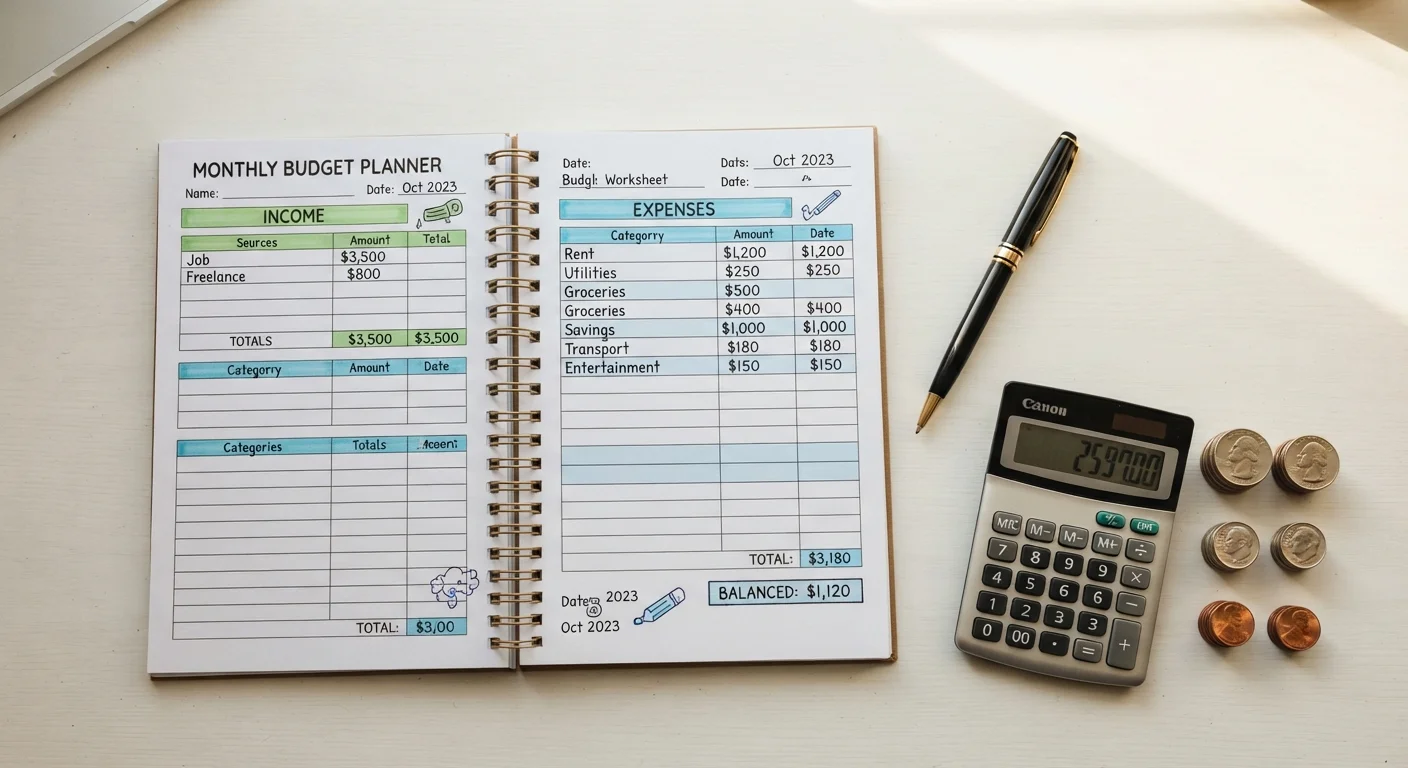
Understanding the mechanics of each method is the essential first step. For a broader look at how these and other frameworks compare, see our overview of major budgeting methods.
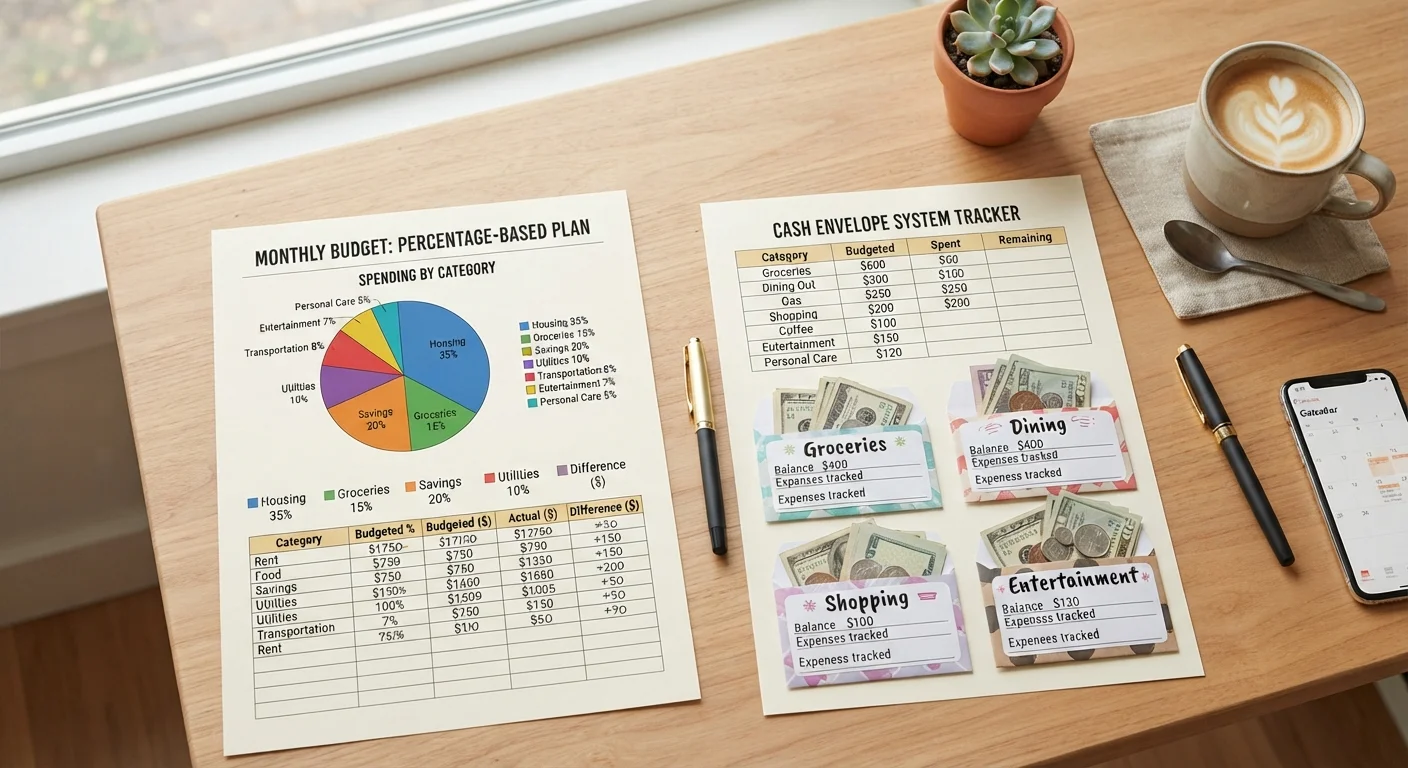
The 50/30/20 Rule
Popularized by Senator Elizabeth Warren and her daughter Amelia Warren Tyagi in their 2005 book All Your Worth, the 50/30/20 rule divides your monthly after-tax income into three broad buckets:
- 50% toward needs - rent or mortgage, utilities, groceries, insurance, minimum debt payments
- 30% toward wants - dining out, subscriptions, hobbies, entertainment
- 20% toward savings and debt repayment above minimums - emergency fund contributions, retirement accounts, extra loan payments
The system is intentionally broad. You don't track individual transactions; you simply confirm at month's end that your spending landed roughly within each percentage band.
Envelope Budgeting
Envelope budgeting - historically practiced with physical cash and paper envelopes - works by pre-allocating a fixed dollar amount to each spending category before the month begins. When an envelope is empty, spending in that category stops until the next funding cycle. Today, many people replicate this digitally using budgeting apps that mirror the same category-by-category logic without requiring cash. Every dollar of income gets a named destination, making this a form of zero-based budgeting at the category level.
| Criterion | 50/30/20 Rule | Envelope Budgeting |
|---|---|---|
| Category structure | 3 broad buckets | Many specific categories |
| Tracking effort | Low - monthly check-in | High - ongoing per category |
| Best income type | Stable, salaried | Variable or irregular |
| Spending control | Soft guidance | Hard limits per category |
| Flexibility | High | Low to moderate |
| Setup difficulty | Minimal | Moderate to significant |
| Works with automation | Yes - easily | Requires digital workarounds |
| Best for impulse spending | Limited effectiveness | Very effective |
Where Each Method Excels - and Falls Short
Both approaches solve the same underlying problem - spending more than you intend - but they do so through very different mechanisms.
Strengths of the 50/30/20 Rule
- Low cognitive load: Three categories are easy to remember and require minimal record-keeping.
- Flexibility: Broad categories give you room to adjust without feeling like you've failed if one dinner costs more than expected.
- Scales with income: As your earnings grow, the percentages automatically adjust your targets upward.
Limitations of the 50/30/20 Rule
- Imprecision in high-cost areas: In cities where rent alone exceeds 50% of take-home pay, the framework needs significant adaptation.
- Wants and needs can blur: A car payment might be a need for one household and a want for another, requiring honest self-assessment.
- Weaker at curbing impulse spending: Because there's no hard stop on individual categories, it's easier to rationalize small overages.
Strengths of Envelope Budgeting
- Powerful spending brake: Empty envelope, no spending - the rule is clear and difficult to ignore.
- Granular visibility: You can see exactly where money is going and which categories routinely run short.
- Builds intentional habits: The act of allocating money category by category forces deliberate decision-making. Research consistently shows that friction in spending decisions reduces impulsive purchases.
Limitations of Envelope Budgeting
- Time-intensive setup: Creating and managing a dozen or more categories each month demands consistent effort.
- Less forgiving with digital-first finances: Most modern spending is card-based or automatic, requiring a digital workaround to replicate the envelope constraint.
- Can feel rigid: Strict limits can generate stress if life genuinely calls for flexibility in a given month.
For more on why structure - not motivation alone - drives long-term budgeting success, see our piece on habits that make budgeting stick.
A Note on the 50/30/20 Percentages
The 50/30/20 targets are guidelines, not rigid rules. In high-cost-of-living areas, housing alone may push the 'needs' share above 50%. In those cases, some financial educators suggest adjusting to a 60/20/20 or 70/10/20 split to reflect reality, then working toward the standard targets over time as income grows or fixed costs decrease. The underlying principle - intentional allocation across needs, wants, and savings - matters more than hitting exact percentages.
Choosing the Right Fit - or Combining Both
The most effective budget is one you'll actually follow. Before committing to either system, consider two factors: your income consistency and your biggest spending challenge.
~33%
Americans with a formal written budget
Gallup polling has consistently found that roughly one-third of US adults track their spending with a detailed budget, highlighting how many households operate without a structured plan.
3-6 months
Recommended emergency fund range
Financial planning guidelines generally suggest keeping three to six months of essential expenses in an accessible account - a savings target the 20% bucket of the 50/30/20 rule is designed to help build over time.
Choose the 50/30/20 rule if: you receive a predictable paycheck, prefer automation, and find detailed tracking tedious. It works especially well as a starting point - once you're comfortable, you can layer in more detail.
Choose envelope budgeting if: you know overspending is concentrated in a few specific categories, your income fluctuates, or you respond better to concrete limits than to abstract percentages. It's also a practical fit if you're working through budgeting fundamentals for the first time and want to understand exactly where every dollar goes.
Consider a hybrid approach: Many households use the 50/30/20 framework to set their overall spending intention, then apply envelope-style limits within the categories that cause the most friction - such as groceries, dining, or discretionary shopping. This preserves simplicity at the top level while adding precision where it matters most. If you're also planning a major purchase, a dedicated savings envelope or sub-category within either system can help protect that goal from being absorbed by everyday spending.
This article is for general informational and educational purposes only and does not constitute personalized financial advice. Consult a qualified financial professional before making decisions specific to your situation.