Why the Soil Test Comes First
Reaching for a bag of lime or a bucket of compost before understanding your soil's baseline is one of the most common garden missteps. Adding the wrong amendment - or the right one in excess - can shift pH out of range, lock up nutrients plants need, or compact soil further. A standard soil test, available through most university cooperative extension programs for a modest fee, returns your soil's pH, organic matter percentage, and key nutrient levels. Those numbers, not guesswork, should drive every amendment decision.
Once you have test results in hand, you can match each amendment to an actual identified need. The sections below explain what the three most common amendments do mechanically, so you understand not just what to add but why.
Where to Get a Reliable Soil Test
Most US states offer soil testing through their land-grant university extension service, often for a nominal fee of $10-$25. Your county extension office can provide submission kits and instructions. Results typically arrive within two to four weeks and include amendment recommendations tailored to your specific crops or lawn type.
Compost: The Foundation Amendment
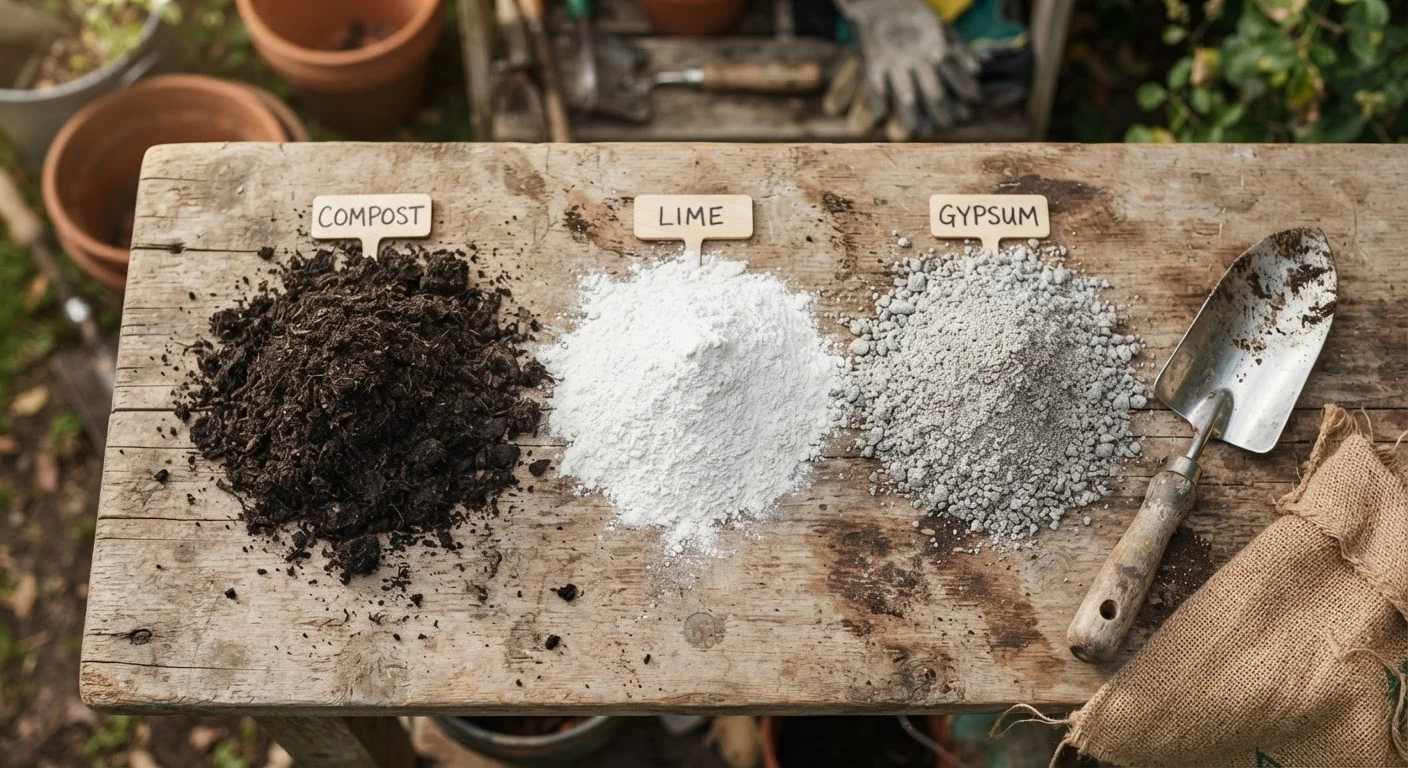
Compost is decomposed organic matter - kitchen scraps, yard waste, manure - broken down by microorganisms into a crumbly, dark material sometimes called humus. It is the most versatile amendment available because it improves nearly every soil type:
- Clay soil: Compost separates dense clay particles, improving drainage and aeration so roots can penetrate more easily.
- Sandy soil: Compost adds organic matter that holds moisture and nutrients, which sandy soil otherwise drains away rapidly.
- Soil biology: Compost feeds bacteria, fungi, and earthworms that cycle nutrients into plant-available forms.
Compost does not dramatically raise or lower pH in typical application rates, making it a safe choice even without a soil test - though testing still helps you understand what else may be needed. Work 1-3 inches into the top 6-8 inches of soil before planting, or apply as an annual top-dress to established beds.
1-3 inches
Annual compost application depth for garden beds
University cooperative extension guidelines commonly recommend this range for maintaining organic matter in residential garden soil.
6.0-7.0
Optimal soil pH range for most vegetables and turf
Soil science references consistently cite this range as the zone where the widest array of nutrients remain plant-available.
3-6 months
Time for agricultural lime to fully react in soil
This timeline is widely cited in extension soil management guides and depends on lime particle size and soil moisture.
Lime: When Soil Is Too Acidic
Lime is a calcium-containing mineral compound - most commonly ground limestone (calcium carbonate) or pelletized dolomitic lime (which also contains magnesium). Its job is to raise soil pH. Most vegetables, turf grasses, and ornamentals prefer a pH between 6.0 and 7.0. Below that range, aluminum and manganese become more soluble and can reach toxic concentrations, while phosphorus and other nutrients become chemically unavailable even if physically present.
Lime is only appropriate when a soil test confirms low pH. Apply too much and you risk raising pH above the optimal range, locking out iron and manganese. Application rates depend on your current pH, your target pH, and your soil's buffering capacity (clay soils require more lime than sandy ones to achieve the same pH shift). Always follow the rate recommended on your test report.
Apply Lime in Fall for Best Results
Because lime reacts slowly with soil, fall application gives it the winter months to work before spring planting begins. Mix it thoroughly into the soil rather than leaving it on the surface, as contact with soil moisture is necessary for the chemical reaction to occur. Retest soil the following spring before applying another round.
Gypsum: Calcium and Sulfur Without pH Change
Gypsum (calcium sulfate) is often misunderstood as a pH-raising material like lime, but it does not meaningfully alter soil pH. What it does offer is two things: a source of calcium and sulfur, and a physical effect on tight clay soils.
In sodium-affected or highly compacted clay, the calcium in gypsum displaces sodium ions and encourages clay particles to clump together - a process called flocculation - which opens up pore space for air and water movement. This can be meaningful in soils that crust severely after rain or irrigation. However, gypsum's structural benefits on clay are less dramatic than sometimes advertised, and results vary widely by soil type. On sandy or loam soils, the structural effect is minimal; its value there is strictly nutritional if your test shows calcium or sulfur deficiency.
Gypsum is generally considered safe to apply - it does not over-correct pH - but there is little reason to spend money on it unless your soil test points to a specific need it addresses.
Putting It All Together
The right amendment strategy depends entirely on what your soil is missing or what physical constraint it has. Most home gardens benefit from regular compost applications regardless of other needs. Lime and gypsum are problem-specific tools - effective when used in response to confirmed deficiencies, unnecessary otherwise.
A useful rule of thumb: if your soil grows plants reasonably well but they look pale or stunted, test before amending. If you have heavy clay that pools water or sandy soil that dries out in days, start with compost while you await test results. For persistent pH imbalances or calcium deficiencies confirmed by testing, lime or gypsum can then be added at recommended rates.
Amendments are investments that pay off over multiple seasons, not quick fixes. Patience and data - in the form of a soil test - will serve your garden far better than an impulse purchase at the garden center.