
Why Loan Documents Demand a Careful Read
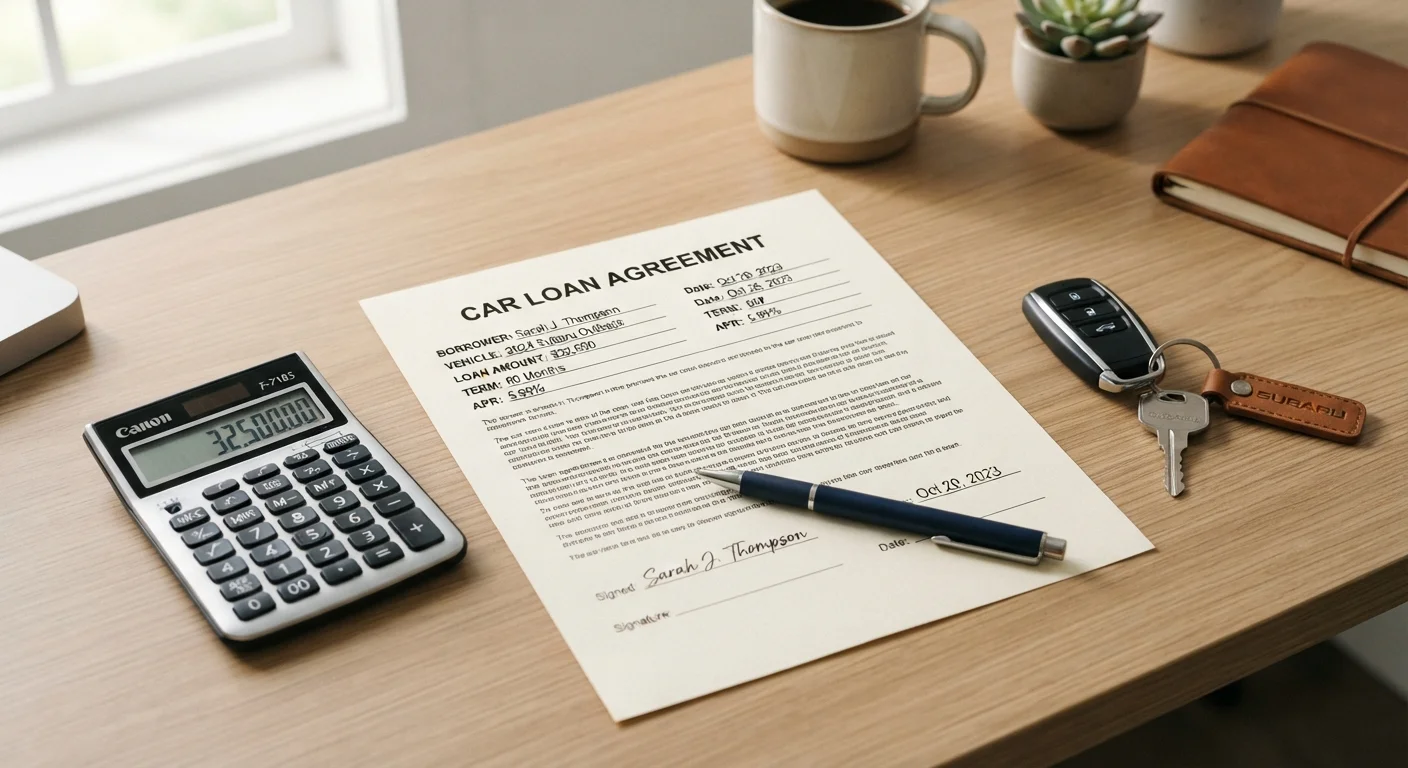
Most car buyers spend hours researching vehicles but only minutes reviewing the financing paperwork. That imbalance is costly. A loan disclosure is a legally binding contract, and terms buried in its pages - not the monthly payment figure on the sales floor - determine what you actually pay for the vehicle over time.
Under the federal Truth in Lending Act (TILA), lenders are required to disclose specific figures before you sign. Knowing where those figures appear and what they mean puts you in control of the conversation. If you are newer to auto financing concepts, our primer on auto financing covers the foundational terms before you dive into a live document.
Compare Offers Side by Side
Before reviewing any offer, compare at least two or three competing loan disclosures side by side. Lenders are required to present TILA figures in a standardized format, which makes direct comparison more straightforward than it might seem. Even a half-point difference in APR can meaningfully affect your total finance charge over a multi-year term.
Before reviewing any offer, compare at least two or three competing loan disclosures side by side. Lenders are required to present TILA figures in a standardized format, which makes direct comparison more straightforward than it might seem.
The Key Fields to Locate First
Every TILA-compliant auto loan disclosure must include four core figures displayed prominently. Identify these before reading anything else:
- Annual Percentage Rate (APR): The annualized cost of borrowing expressed as a percentage, incorporating the interest rate plus most required fees. This is the most useful single number for comparing offers. Do not confuse it with the stated interest rate, which excludes fees. Our auto loan terms glossary explains the distinction clearly.
- Finance Charge: The total dollar cost of the loan - interest plus fees - expressed as a lump sum over the full repayment period. A lower monthly payment paired with a longer term can produce a dramatically higher finance charge.
- Amount Financed: The principal loan amount after any down payment and trade-in credits are applied. Verify this matches the vehicle price you negotiated.
- Total of Payments: The sum of all scheduled payments. Subtracting the amount financed from this figure gives you the finance charge, providing a useful cross-check.
If any of these four figures is missing or obscured, that is a compliance red flag requiring immediate clarification from the lender.
Clauses Buyers Most Commonly Overlook
Beyond the TILA box, auto loan documents contain several provisions that routinely surprise borrowers after signing.
Prepayment Terms
Some lenders impose a prepayment penalty - a fee charged if you pay off the loan ahead of schedule. Others use a precomputed interest structure, which means early payoff does not save you as much interest as you might expect. Read any section labeled "prepayment," "early payoff," or "rebate of finance charge" carefully. If the document is silent on prepayment, ask the lender in writing before signing.
Add-On Products
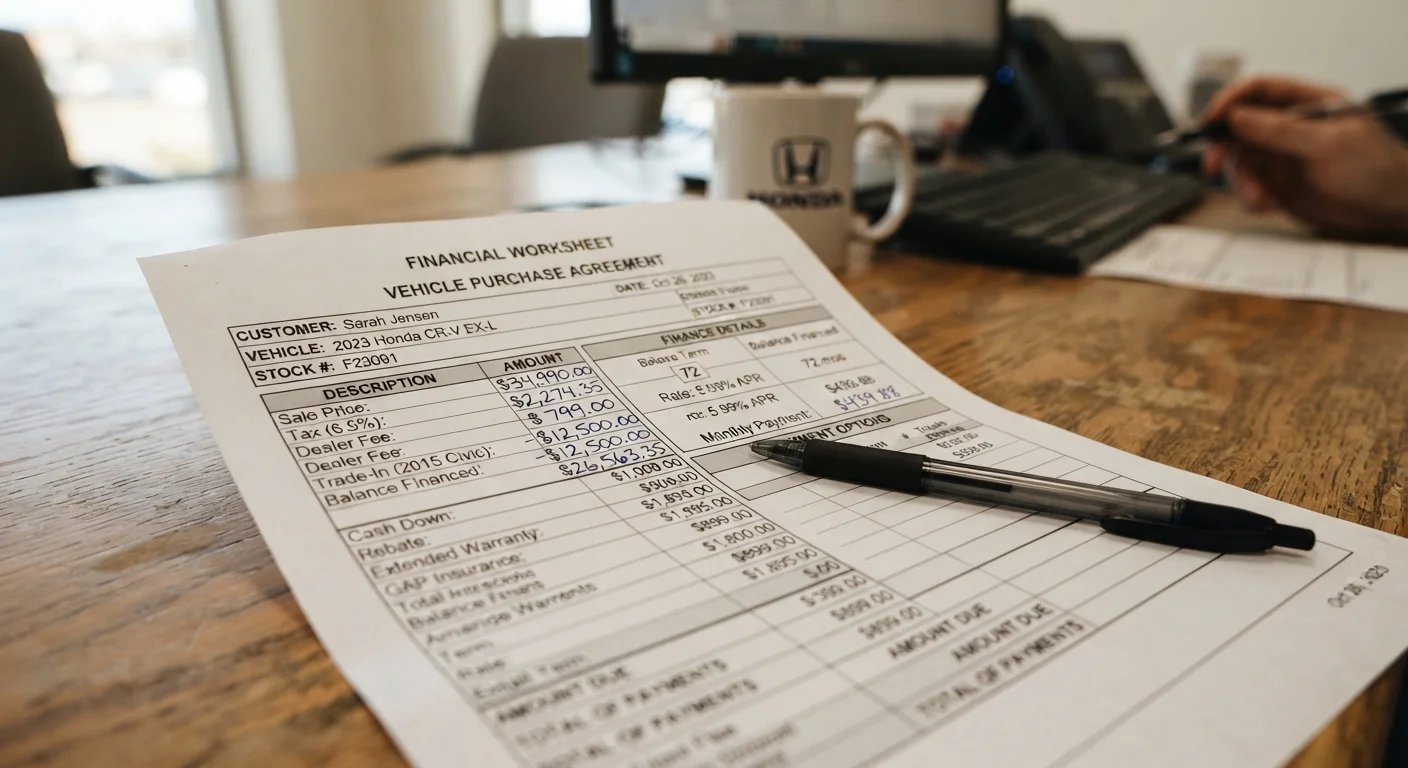
GAP coverage (Guaranteed Asset Protection), credit life insurance, and extended service contracts frequently appear as line items within the loan amount financed. These products are typically optional, but some loan documents present them as defaults. Identify every item included in your amount financed and confirm whether each is required or voluntary. For a broader look at how these elements interact with the overall deal structure, see how dealer worksheets are structured.
Variable-Rate Provisions
Retail installment contracts through dealerships are almost always fixed-rate, but confirm this explicitly. A clause permitting rate adjustment after signing - sometimes tied to financing falling through - can significantly change your payment obligation.
Auto Loans Typically Have No Cooling-Off Period
Unlike some consumer contracts, auto loan agreements generally do not come with a federally mandated right to cancel after signing. Once the contract is executed and the vehicle is in your possession, the terms are typically binding. Always resolve any uncertainty about the document before - not after - you sign.
Right-to-Cancel Language
Auto loans do not carry the same three-day rescission right as some other consumer contracts. Once you sign and drive off, the terms are generally binding. Take as much time as you need before signing rather than after.
Walking Through the Document Step by Step
Request the full loan document before the signing appointment
Ask the lender or dealer finance office to provide the complete retail installment contract or loan agreement - not just a payment quote - at least 24 hours before you are expected to sign. Review it in a quiet environment without time pressure.
Locate and verify the TILA disclosure box
Find the federally mandated disclosure box, typically near the top of the document. Confirm the APR, finance charge, amount financed, and total of payments are all present. Cross-check the amount financed against the purchase price, down payment, and any trade-in credit on your sales agreement.
Calculate the effective cost of each add-on
For every product bundled into the amount financed - GAP coverage, credit insurance, service contracts - note the standalone cost and determine whether it is truly optional. Remove any you did not explicitly agree to, then recalculate the amount financed and total of payments to reflect the corrected figures.
Read the prepayment section in full
Locate any clause governing early payoff. Note whether a penalty applies, whether interest is precomputed, and what the process is for requesting a payoff quote mid-loan. Record this information separately for future reference.
Confirm the interest rate type and any conditional clauses
Verify the loan is fixed-rate unless you have intentionally agreed to a variable structure. Look for any clause stating the rate or terms may change if financing is not approved by a specific date or institution - sometimes called a "spot delivery" or "yo-yo" clause - and decline to take delivery until financing is fully confirmed.
Document everything and keep copies
Before leaving the finance office, obtain a fully executed copy of every document you signed. Photograph or scan each page as a backup. Store these with other vehicle purchase records for the duration of the loan.
After completing this review, use our car financing readiness checklist to confirm every item is verified before committing. And if you encounter a promotional zero-percent rate in the document, our article on common misconceptions about 0% APR financing details the conditions that frequently catch buyers off guard.
This article provides general financial information for educational purposes only and does not constitute personalized financial or legal advice. Consult a qualified financial professional before making decisions based on your individual circumstances.