
What Online Research Does Well
Digital research compresses what would otherwise take days of store visits into a focused session. Within a single evening you can scan manufacturer specs, compare multiple options side by side, read hundreds of user accounts, and check price history - all before touching a physical product.
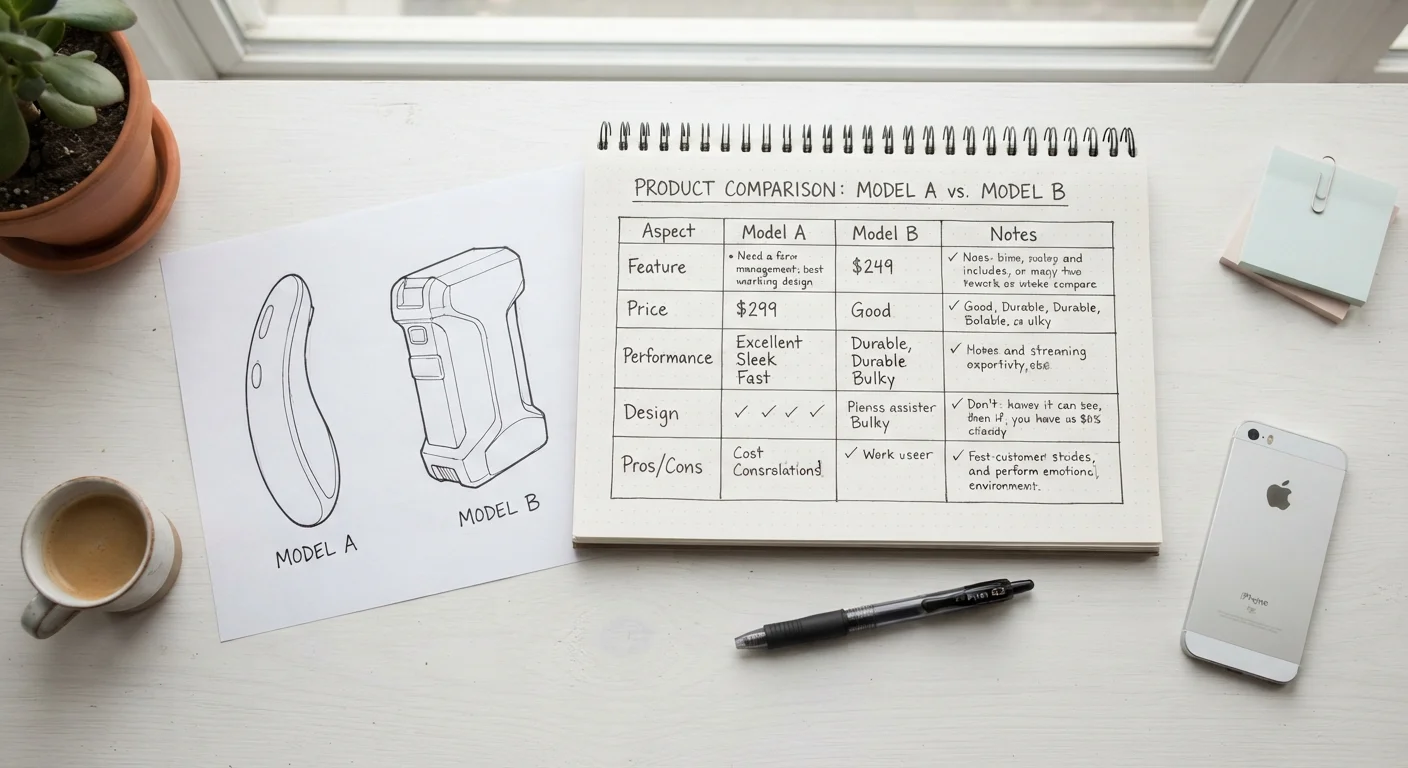
Structured comparison is where online research shines brightest. Spec sheets let you filter out options that don't meet hard requirements - wrong voltage, insufficient capacity, incompatible format - before you invest any further time. For a framework to structure that comparison systematically, see our side-by-side product comparison guide.
Review aggregation is another strong suit. Reading through many user accounts - especially one-star and two-star reviews - often reveals recurring failure modes or design frustrations that marketing copy deliberately omits. That said, reviews carry their own reliability challenges. Crowdsourced opinions and expert testing measure different things, and understanding that distinction sharpens how you weigh each source.
| Online Research | In-Store Evaluation | |
|---|---|---|
| Breadth of options | Very wide - entire market accessible | Limited to store's current stock |
| Spec comparison | Easy and side-by-side | Often requires asking staff |
| Sensory / ergonomic assessment | Not possible | Direct and immediate |
| Review volume | Thousands of accounts available | Staff opinion only |
| Time investment | Flexible; done at your pace | Requires travel and store hours |
| Risk of bias | Manufacturer copy, paid rankings | Display conditions, sales incentives |
| Long-term reliability signal | User forums, independent labs | Not available |
What In-Store Evaluation Does Well
A store visit answers questions that no amount of reading can settle. How does the item actually feel in your hand? Is the fabric softer or stiffer than photos suggest? Does the hinge feel solid, or does it flex in a way that signals cheap construction? These sensory details are the ones buyers most frequently cite as surprises after delivery.
Ergonomics and fit are especially hard to judge remotely. A mattress firmness rating, a tool's grip diameter, or a bag's strap padding only resolve when your own body is involved. Retailers' floor models exist precisely because the industry knows this.
An in-store visit also lets you ask a knowledgeable sales associate targeted questions - not for a sales pitch, but to surface configuration options, common installation issues, or compatibility notes that don't make it into online listings. Come with a prepared list of specific questions based on what your online research raised.
Arrive at the Store with a Script
Before any store visit, write down three to five specific things you want to confirm from your online research - a concern about build quality, a question about compatibility, or a feature you need to see in action. This keeps you focused, reduces the influence of in-store merchandising, and ensures you leave with the information you actually need rather than a general impression.
The Blind Spots of Each Approach
Online research can mislead through information overload or information gaps. Specs are written by manufacturers and emphasize favorable attributes. Review samples skew toward extreme experiences - very satisfied or very disappointed - and may not represent your use case. Paid placements and affiliate-driven rankings can distort search results without being labeled transparently. Even strong brand reputations can mask product-level weaknesses worth scrutinizing.
In-store evaluation has its own limits. Floor models are often set to optimal display conditions - screen brightness maxed, demo software running - rather than everyday use. Stock in physical stores is often narrower than what's available online, so you may be evaluating a limited subset of the market. Store staff knowledge varies widely, and sales incentives are real.
Both methods share one limitation: neither tells you how the product performs over months or years of real-world use. For that, long-term owner forums and independent testing labs are more reliable than either a store visit or a manufacturer's product page.
How to Sequence the Two Methods Effectively
The most efficient approach treats these as phases, not alternatives. Start online to build a shortlist - ideally three to five candidates - that meet your hard requirements and have a credible track record in user and expert reviews. Use this phase to eliminate options on objective grounds, not to make a final decision.
Then take that shortlist into stores. Your goal isn't to browse; it's to stress-test. Handle each candidate with specific questions in mind from your research: Does this feel as solid as reviewers said? Is the interface as intuitive as claimed? Does the size work for how I'll actually use it?
Before you buy - whether online or in-store - verify the return policy for that specific channel. Consumer rights and return protections differ meaningfully between online and in-store purchases, and knowing those terms in advance prevents surprises. A full pre-purchase checklist, covering everything from needs definition to policy verification, is outlined in our pre-purchase research checklist.