Why the Scale Isn't the Whole Picture
Many pet owners assume a number on the bathroom scale is the definitive measure of their pet's health. In reality, ideal body weight varies significantly by breed, sex, frame size, and individual build. A 65-pound Labrador and a 65-pound Greyhound are in very different physical conditions, even though the scale reads identically.
Veterinary professionals rely on Body Condition Scoring (BCS) - a standardized, hands-on evaluation system - to judge whether an animal carries too little, too much, or just the right amount of body fat relative to their frame. Most clinics use a 9-point scale, where 1 is severely underweight and 9 is obese, with 4-5 representing ideal condition. This same framework is published by organizations including the World Small Animal Veterinary Association (WSAVA) and is routinely taught in veterinary training.
Learning to apply BCS at home puts a meaningful tool in your hands between annual checkups. It complements - but does not replace - professional veterinary assessment. For a broader home health routine, see our guide on at-home pet health checks.
How to Assess Your Pet's Body Condition at Home
The following steps walk you through a practical BCS check you can perform on most adult dogs and cats. Have your pet stand naturally on a flat surface. Work methodically, combining what you see with what you feel.
Observe your pet's silhouette from above
Stand directly above your pet while they stand or walk normally. Look for a visible waist - a narrowing of the body between the ribcage and hips. In an ideally conditioned dog or cat, this indentation is clear. If the sides are straight or bulging outward, excess fat is likely present. If the waist is extremely pinched or the hips protrude sharply, the animal may be underweight.
Check the side profile for an abdominal tuck
Crouch or kneel so you are at your pet's eye level and view them from the side. A healthy animal typically shows an abdominal tuck - the belly line rises upward toward the hind legs rather than hanging level with or below the chest. Absent or inverted tucking suggests excess abdominal fat, which is particularly associated with health risk in cats.
Feel along the ribcage
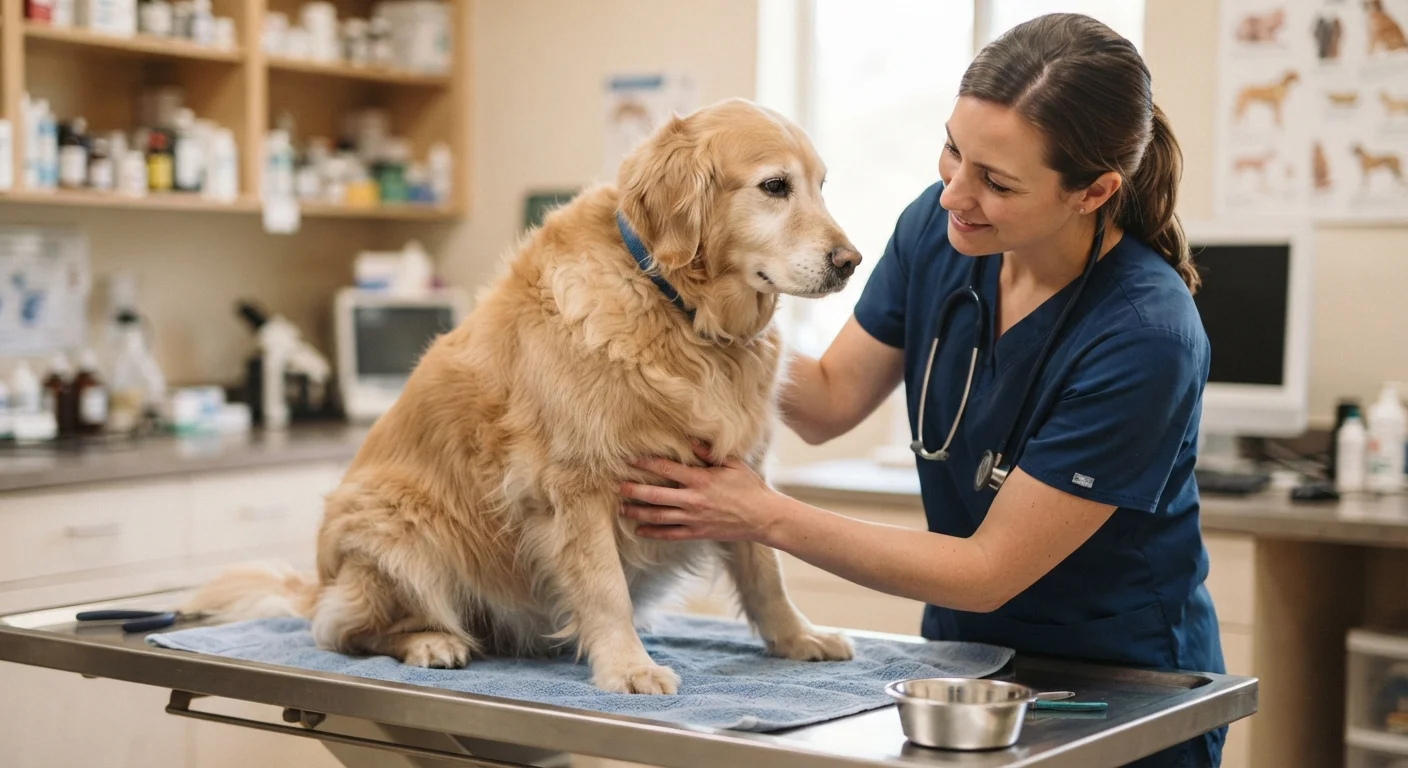
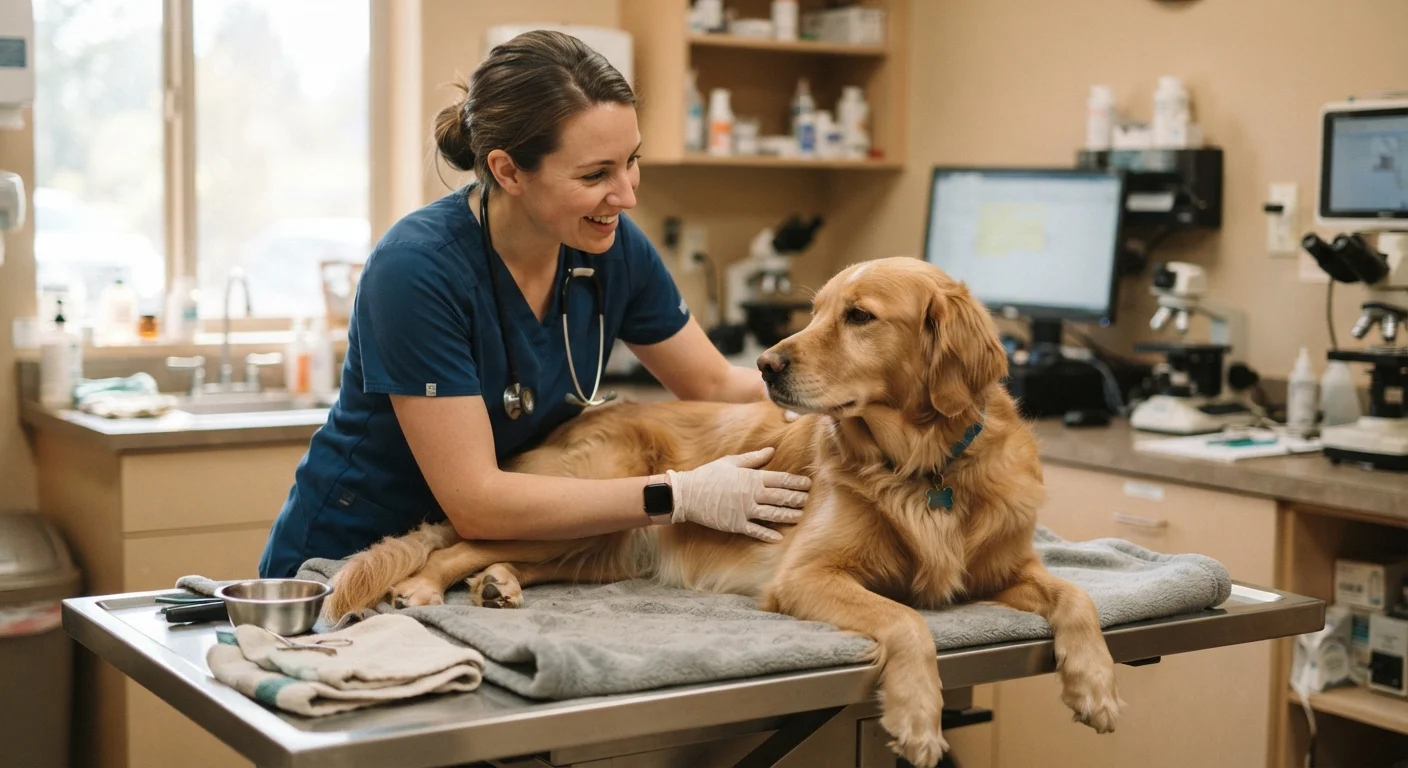
Place both hands on either side of your pet's chest, thumbs resting lightly on the spine, fingers spread along the sides of the ribcage. Apply gentle, even pressure and move your fingers along the ribs. You should be able to feel each individual rib with light pressure - similar to running your fingers over the backs of your knuckles. If you must press firmly before feeling anything, there is likely excess fat coverage. If ribs feel sharp or protrude with no sensation of padding, the pet may be underweight.
Assess muscle mass along the spine and hindquarters
Run your fingers gently along the top of the spine and over the muscles of the lower back and hindquarters. Well-conditioned pets have defined muscle flanking the spine with no prominent bony protrusions. Muscle loss (called sarcopenia or muscle wasting) can occur even in overweight pets - a condition sometimes called "skinny fat" - and is a separate concern from fat coverage alone. Veterinarians sometimes use a companion Muscle Condition Score (MCS) to capture this dimension.
Record your observations and track changes over time
Write down your BCS estimate and date it. Note the pet's weight if you have access to a scale - a consistent monthly weigh-in using a baby scale or by weighing yourself first and then holding your pet provides a useful data point alongside BCS. Tracking trends matters more than any single reading. A consistent shift of more than 5-10% of body weight over a few weeks warrants veterinary attention. You can also photograph your pet from above and the side to create a visual record.
Weight Changes Can Signal Medical Issues
Unexplained or rapid changes in your pet's weight or body condition - whether loss or gain - should always be evaluated by a veterinarian before you adjust diet or activity. Conditions including thyroid disease, diabetes, kidney disease, and dental pain can all affect weight in ways that dietary changes alone will not resolve. Do not delay a vet visit based on home assessment alone.
What the Results Mean - and What to Do Next
Once you've worked through the assessment, you can roughly place your pet on the 9-point scale:
- Score 1-3 (Underweight): Ribs, spine, and hip bones prominently visible and easily felt with no padding. Significant muscle loss may be present.
- Score 4-5 (Ideal): Ribs easily felt with minimal fat cover, a visible waist when viewed from above, and an abdominal tuck visible from the side.
- Score 6-7 (Overweight): Ribs felt only with firm pressure; waist barely visible or absent; rounded abdomen with no tuck.
- Score 8-9 (Obese): Ribs not palpable under heavy fat deposits; no discernible waist; fat deposits visible over the neck, limbs, and base of tail.
If your pet scores outside the 4-5 range, bring your findings to your veterinarian. Weight changes - especially rapid or unexplained ones - can signal underlying medical conditions rather than simply a diet issue. Excess weight also carries serious long-term consequences; our article on health risks of obesity in pets explains what chronic excess body condition can mean for joints, metabolism, and lifespan.
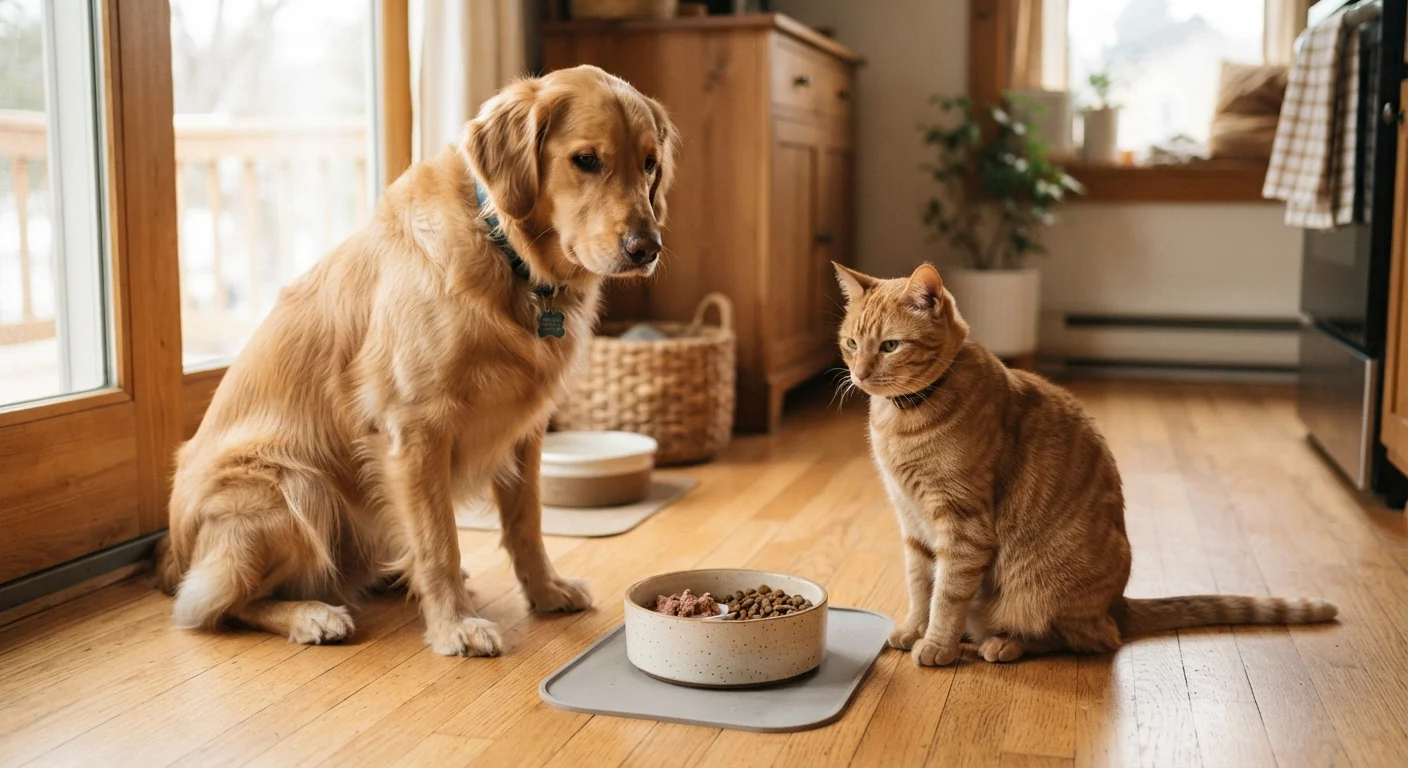
For pets in a healthy range, this assessment is still a useful baseline. Pair it with a nutrition review - our diet completeness checklist can help you audit whether what you're feeding supports long-term wellbeing.
This article is for general informational purposes only and does not constitute veterinary medical advice. Always consult a licensed veterinarian for guidance specific to your pet's health and nutritional needs.