
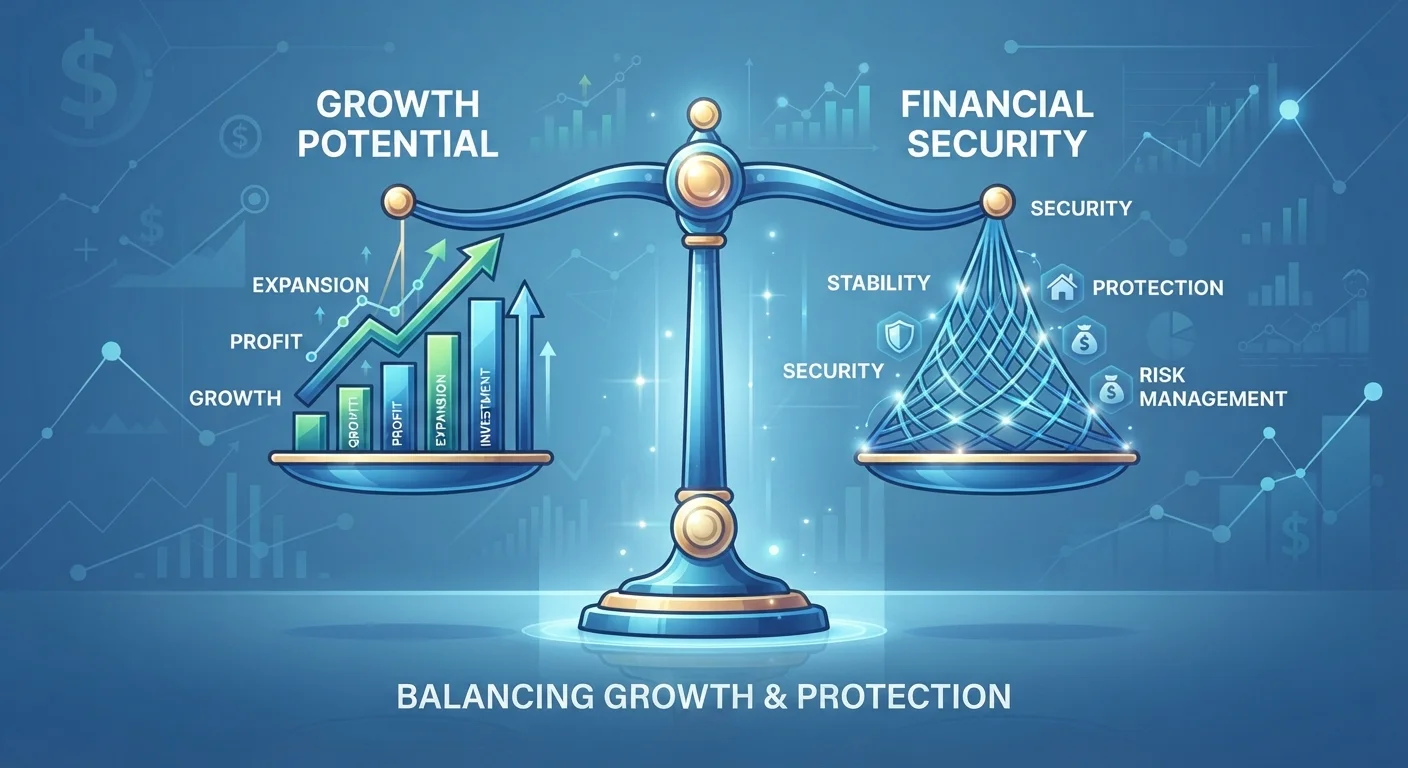
Why Risk Tolerance Is More Than a Personality Quiz
When most people encounter the term "risk tolerance," it's often in the context of a short questionnaire asking whether a 20% portfolio drop would make them nervous. That's a starting point, but it barely scratches the surface of what risk tolerance actually means - and why it matters so deeply.
Risk tolerance is the foundation on which investment decisions are built. Before you choose an asset class like stocks or bonds, before you think about diversification, and before you set contribution amounts, you need a clear understanding of how much risk you can genuinely handle - both financially and emotionally.
Getting this wrong has real consequences. An investor who takes on too much risk may panic and sell during a market decline, locking in losses that a calmer, better-matched strategy would have avoided. An investor who takes on too little may find their savings slowly eroded by inflation over decades.
~50%
Of US adults who own stocks
According to Gallup's annual Economy and Personal Finance survey, roughly half of US adults report owning stocks directly or through mutual funds, though rates vary significantly by income and education.
30-40%
Typical equity market peak-to-trough decline in a major recession
Historical US equity market downturns, such as those during 2008-2009, involved losses of 40% or more from peak - illustrating the real-world stakes of mismatched risk tolerance.
3-6 months
Recommended emergency fund coverage
Financial planning guidance widely suggests holding three to six months of living expenses in liquid savings before investing, as this buffer is a key component of risk capacity.
The Two Dimensions: Capacity and Appetite
A useful way to think about risk tolerance is to separate it into two distinct dimensions: risk capacity and risk appetite.
Risk capacity is objective. It's determined by your financial situation - your time horizon, income stability, existing emergency savings, debt obligations, and how soon you'll need to access your invested funds. Someone with 30 years until retirement and a stable income has a high capacity to ride out market volatility. Someone who may need their invested funds within three years has a much lower capacity, regardless of their feelings about risk.
Risk appetite is subjective. It's your psychological comfort with uncertainty and potential loss. Even someone with strong financial capacity may genuinely struggle to sleep soundly when their portfolio drops 15%. That emotional reality matters - because investment decisions driven by anxiety tend to be costly ones.
Understanding how both dimensions interact is essential. Review the key investing terms every new investor should know if concepts like time horizon or asset allocation are still unfamiliar.
“The investor's chief problem - and even his worst enemy - is likely to be himself. In the end, how your investments behave is much less important than how you behave.”
— Benjamin Graham, Author of 'The Intelligent Investor' and foundational figure in value investing
What Shapes Your Risk Tolerance
Several factors influence where you fall on the risk spectrum, and they're worth examining carefully:
- Time horizon: The longer you have before needing the money, the more time you have to recover from downturns, which generally supports a higher-risk approach.
- Income and job stability: Reliable income gives you more capacity to leave investments untouched during market drops.
- Emergency savings: A solid emergency fund means you're less likely to need to sell investments at a bad time.
- Existing debts and obligations: High fixed expenses reduce your financial cushion and lower your effective capacity for risk.
- Investing experience: Familiarity with how markets behave tends to reduce emotional reactions to volatility, though it's not a substitute for honest self-assessment.
It's also worth noting that common misconceptions about investing - such as believing that avoiding the market is the "safe" choice - can distort how people perceive their own tolerance.
How Risk Tolerance Translates Into Portfolio Decisions
Once you have a clearer picture of your risk tolerance, it becomes a practical guide for how to allocate your investments. A higher tolerance generally supports a greater weighting toward equities (stocks), which carry more volatility but historically offer stronger long-term growth potential. A lower tolerance typically points toward a heavier allocation to bonds or cash-equivalent instruments, which are more stable but offer more modest returns.
This isn't a one-time exercise. Life changes - a new job, a growing family, a divorce, an inheritance, or approaching retirement - can meaningfully shift both your capacity and appetite for risk. Revisiting your tolerance periodically, and after major life events, is a sound practice.
Understanding what diversification can and cannot do is also part of this picture - spreading risk is valuable, but it doesn't eliminate the need to match your overall portfolio to your genuine tolerance level.
Finally, keep in mind that risk tolerance shapes investing decisions - but investing itself is only one part of a broader financial strategy. If you're still clarifying the distinction between building savings and putting money to work in the market, understanding the difference between saving and investing is a useful first step.
This article is for general informational and educational purposes only and does not constitute personalized financial or investment advice. Consult a licensed financial adviser before making decisions about your own portfolio or financial situation.