
Why the Quiet Mistakes Do the Most Damage
The savings mistakes that receive the most attention tend to be dramatic: a risky investment gone wrong, a bankruptcy, a financial crisis. But for most people, the real erosion of long-term savings happens far more quietly - through patterns repeated month after month that each seem small but compound into significant setbacks over years.
Understanding these subtle pitfalls is the first step toward building a financial foundation that genuinely holds. The good news is that most are correctable once identified. The key is recognizing them before too much time has passed.
This Is Education, Not Financial Advice
The information in this article is intended for general educational purposes only and does not constitute personalized financial, investment, or tax advice. Individual financial situations vary significantly. Consult a qualified financial professional before making decisions about your own savings or investment strategy.
The Most Common Pitfalls - and How to Correct Them
The mistakes below represent patterns observed consistently across personal finance research and practice. They are not character flaws - they are predictable responses to how our financial systems and habits are typically structured. Recognizing each one makes it easier to interrupt the cycle.
Allowing lifestyle inflation to silently absorb every raise or income boost.
Why it happens: Higher earnings feel like permission to spend more, and upgrades to housing, dining, or subscriptions happen gradually enough that each step feels reasonable in the moment.
Holding long-term savings in accounts with interest rates that trail inflation.
Why it happens: Many people open a savings account once and never revisit the rate, assuming safety and consistency mean growth. Convenience often wins over optimization.
Skipping an emergency fund and relying on credit or retirement accounts when unexpected expenses arise.
Why it happens: Building a liquid cash cushion can feel like a lower priority than investing or paying off debt - until an emergency makes the trade-off painfully visible.
Treating savings contributions as optional - saving only whatever remains after monthly spending.
Why it happens: Without automation, savings compete with every other spending decision. Discretionary purchases often win because they are immediate and tangible.
Setting a savings goal once and never revisiting it as life circumstances change.
Why it happens: Reviewing finances feels tedious, and people often assume that staying the course is enough - even when income, expenses, or timelines have shifted.
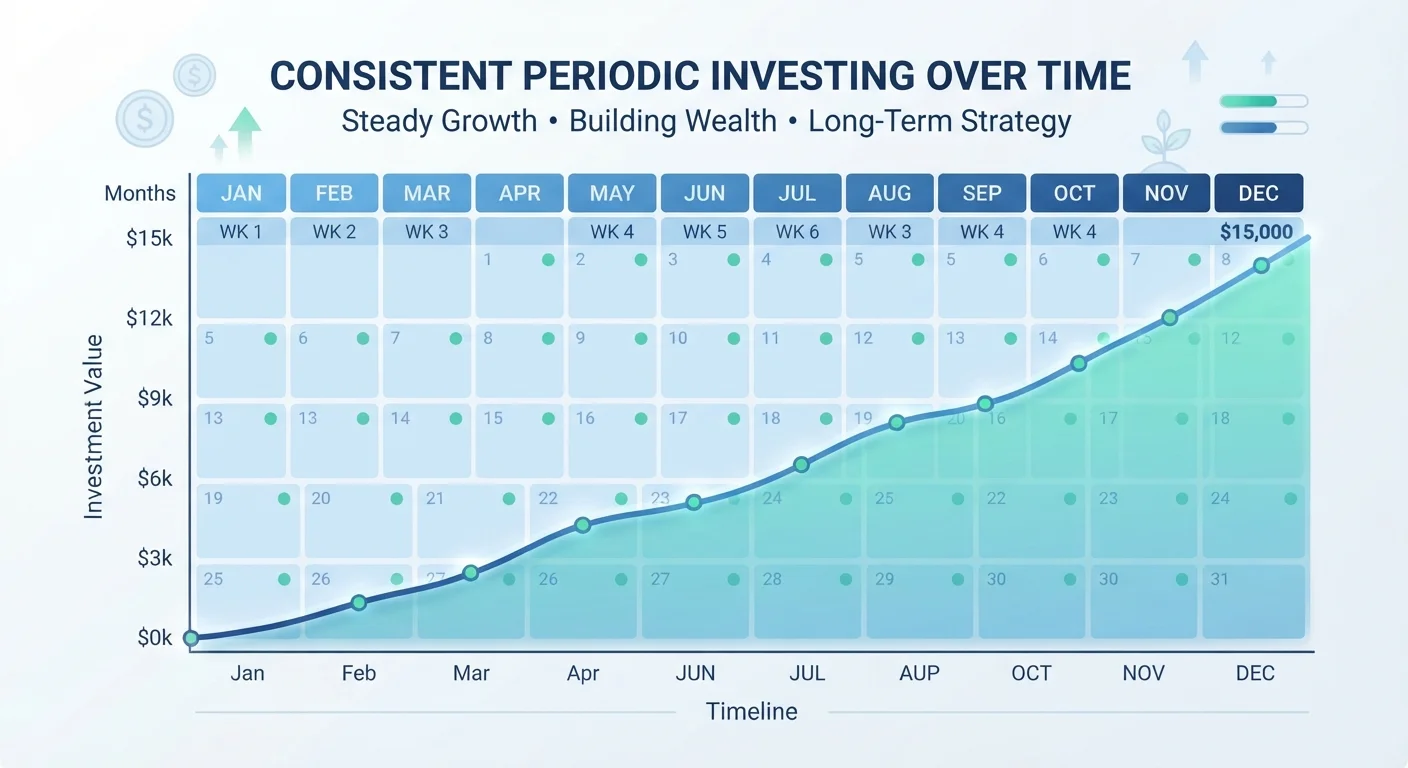
One additional pattern worth noting is irregular or reactive investing - contributing only when markets look favorable and pausing during volatility. This approach tends to produce worse long-term outcomes than consistent, scheduled contributions. Dollar-cost averaging is one strategy designed specifically to counter this impulse by removing timing decisions from the equation.
Withdrawing From Retirement Accounts Early Carries Real Costs
Tapping tax-advantaged retirement accounts before the eligible age typically triggers income taxes plus an additional early-withdrawal penalty - often 10% under current IRS rules. Beyond the immediate hit, you also lose the future compounding growth that money would have generated. Exhaust all other options before considering an early withdrawal.
Building Systems That Protect Savings Progress
Avoiding these pitfalls is less about discipline and more about designing a financial structure that doesn't require constant willpower. Automation, periodic reviews, and clear goal distinctions do more than motivation alone.
~40%
Americans without emergency savings to cover $400
The Federal Reserve's Report on the Economic Well-Being of U.S. Households has consistently found that a significant share of adults would struggle to cover an unexpected $400 expense without borrowing or selling something.
2-3%
Average annual inflation rate (long-run US target)
The Federal Reserve targets roughly 2% annual inflation over the long run, meaning money held in accounts earning less than that rate gradually loses purchasing power each year.
Pairing stronger savings habits with mindful spending patterns creates a reinforcing cycle. Habits that separate people who stick to a budget explores the behavioral side of this equation - how structure, not motivation, drives consistency. For a broader view of how saving and longer-term financial planning connect, the Budgeting Basics hub offers a range of practical frameworks.
This article is for general informational and educational purposes only and does not constitute personalized financial, investment, or tax advice. Consult a qualified financial professional regarding your specific circumstances.