
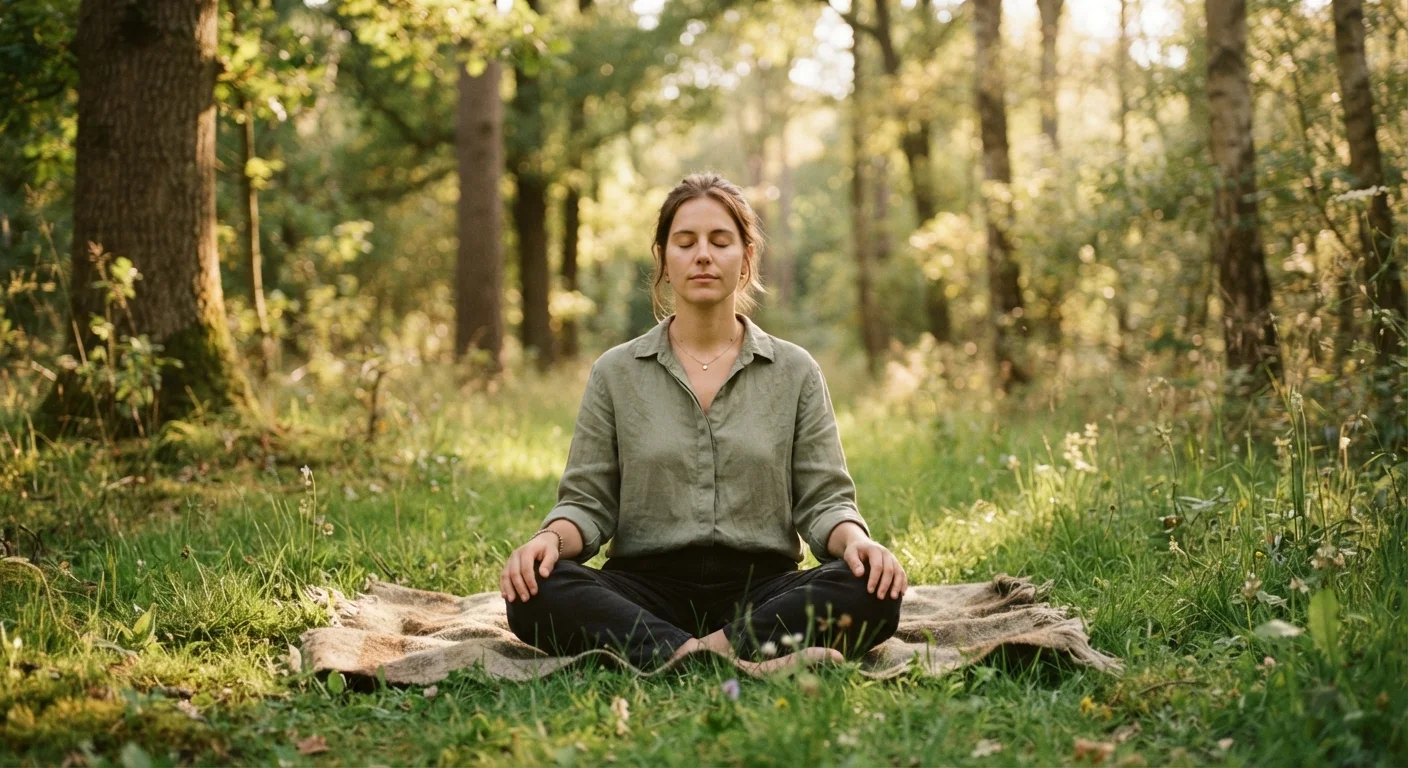
What Grounding Actually Does
When stress or anxiety surges, the mind tends to pull away from the present - looping through worst-case scenarios, replaying past events, or bracing for threats that haven't arrived. Grounding techniques work by reversing that pull. They anchor attention back to what is immediate, concrete, and sensory, which can help interrupt the escalating feedback loop of anxious thought.
The underlying principle is simple: the nervous system finds it difficult to sustain a full threat response when the brain is actively engaged with neutral or pleasant sensory input. Research in areas like cognitive behavioral therapy (CBT) and somatic therapies has supported the use of grounding exercises as a practical, accessible tool for managing acute distress - though effects vary by person and situation.
It's worth distinguishing everyday overwhelm from clinical anxiety disorders. If you're unsure which you're dealing with, the difference between stress and anxiety matters both for how you understand your experience and how you respond to it.
Practice When Calm, Not Just When Overwhelmed
Like most skills, grounding techniques become more automatic with repetition. Practicing them during ordinary moments - not just during stress - strengthens your ability to access them quickly when it counts. Even two to three minutes of deliberate practice a day can make a meaningful difference over time.
Before You Begin
Grounding is most effective when practiced before you need it urgently. Like any skill, familiarity reduces the cognitive load of executing it under pressure. A few minutes of calm practice - even once a day - helps encode these techniques so they're available when stress spikes.
You don't need a quiet room, special equipment, or a particular posture. Most of these exercises can be done while seated at a desk, standing in a hallway, or waiting in a car.
What you will need
This article is for general informational purposes and does not constitute medical or psychological advice. If you are experiencing persistent anxiety, panic attacks, or significant distress, please consult a qualified mental health professional.
Core Grounding Techniques
The following approaches span sensory, breath-based, and cognitive methods. Try a few to see which resonates - there is no single technique that works universally.
Try the 5-4-3-2-1 Sensory Scan
This is one of the most widely used grounding exercises. Slowly identify 5 things you can see, 4 you can physically feel (the chair beneath you, your feet on the floor), 3 you can hear, 2 you can smell, and 1 you can taste. Move deliberately through each sense, naming each item silently or aloud.
The exercise works by engaging multiple sensory channels simultaneously, which competes with the brain's tendency to narrow focus onto perceived threats.
Use Box Breathing to Steady Your Nervous System
Box breathing (also called square breathing) is a structured breath pattern: inhale for a slow count of four, hold for four, exhale for four, hold again for four. Repeat the cycle three to five times.
Controlled exhalation activates the parasympathetic nervous system, which counteracts the physiological arousal associated with stress. This technique is used in clinical, military, and athletic contexts precisely because it works quickly and is discreet.
Ground Through Physical Contact
Press your feet firmly into the floor and notice the sensation. If seated, feel the full weight of your body in the chair. You can also hold a cool or textured object - a smooth stone, a cup of water, a fabric with distinct texture - and focus entirely on its physical properties: temperature, weight, surface detail.
Physical sensation is immediate and hard to mentally override, making tactile grounding particularly effective when thoughts are racing.
Use a Simple Cognitive Anchor
Cognitive grounding uses mental tasks to redirect focus. Name five items in a single category - types of fruit, US state capitals, films you've seen - or slowly count backward from 100 by sevens. The mild cognitive demand occupies the prefrontal cortex and reduces the emotional brain's dominance during moments of overwhelm.
Practice a Brief Body Scan
Starting at the top of your head, slowly move your attention downward through your body - scalp, forehead, jaw, shoulders, chest, hands, belly, legs, feet. At each area, simply notice sensation without trying to change it: warmth, tension, tingling, or neutrality.
The body scan draws attention inward rather than outward or into future worry, and can reveal where tension is being held physically, which is useful information for managing stress over time.
For a broader look at how grounding fits alongside other strategies, see common mental wellness strategies. You can also explore how these techniques integrate into a personal mental wellness routine for longer-term benefit.
Making Grounding a Sustainable Habit
Grounding works best as part of a broader approach to emotional well-being rather than as a standalone emergency measure. Pairing it with reflective practices - like periodic check-ins on your mental state - helps you notice patterns early, before overwhelm builds. The monthly mental wellness check-in offers a structured way to do exactly that.
Some people find that journaling for mental clarity complements grounding well - using writing to process what surfaces after a grounding session can deepen self-awareness over time. And for a wider view of the habits that practitioners point to for sustaining well-being, see self-care habits mental health professionals recommend.
These Techniques Are Not Crisis Support
Grounding exercises are designed for everyday moments of stress and overwhelm - not for mental health crises, panic disorders, PTSD, or emergencies. If you are experiencing severe or frequent distress, thoughts of self-harm, or symptoms that interfere with daily functioning, please reach out to a qualified mental health professional or a crisis support line.